치맥 — The Word for Fried Chicken and Beer That Became a National Pastime

Koreans don’t say let’s eat chimaek. They say let’s do chimaek.

There is a small but telling detail in how Koreans talk about fried chicken and beer. In Korean, the more common phrasing is not “shall we eat chimaek” but “shall we do chimaek” — 치맥 하러 갈래? The choice of verb matters. It suggests that chimaek is not simply a meal. It is an activity, something you participate in rather than something you merely consume.

What the Word Actually Means
치맥, chimaek, is a portmanteau — 치 from 치킨 (chikin, fried chicken) and 맥 from 맥주 (maekju, beer). The pairing itself is older than the word used to describe it, but the word became official enough that it entered the Korean dictionary, and eventually the Oxford English Dictionary as well, in 2021 — a small but real marker of how far the combination traveled beyond its origins.

The pairing makes practical sense before it makes cultural sense. Korean fried chicken tends to be double-fried for an exceptionally thin, crackly crust, and is often finished with a hand-painted sauce layer — whether the plain huraideu style or the sweet-spicy yangnyeom version. A light Korean lager cuts cleanly through the richness of that fried exterior in a way that heavier beers do not, which is part of why the combination caught on so thoroughly once it was established.

A Slow Build, Then a Sudden Spike
Fried chicken’s path into Korean food culture began later than many people assume. The trend traces back to the late 1960s, when an establishment called Myeongdong Yeongyang Center in Seoul began roasting whole chickens over an electric oven. American military presence following the Korean War had already introduced deep-fried chicken to the peninsula, but it was not until cooking oil became widely available in Korea in the early 1970s that fried chicken in its modern form began to spread.
The first dedicated Korean fried chicken franchise, Lims Chicken, opened in 1977 in the basement of a Seoul department store. Through the late 1970s and into the 1980s, fried chicken and the era’s newly popular draft beer were increasingly served together at the same establishments, gradually merging into a single, recognizable pairing — though chicken and beer remained a relative luxury for much of this period, and the two were not yet thought of as a unified cultural phenomenon with its own name.

That changed with the 2002 Korea–Japan World Cup. Public squares across Korea filled with massive screens for outdoor viewing parties, and crowds dressed in red gathered to cheer for the national team, eating fried chicken and drinking beer as they watched. The number of chicken restaurants in Korea nearly doubled in the years that followed, jumping from roughly 10,000 to 25,000. The term “chimaek” itself became widely used around this period, giving a name to something that had quietly been building for two decades.

The Drama That Sent It Global
If the 2002 World Cup cemented chimaek domestically, it was a television drama that carried the word internationally. The 2013–2014 Korean drama My Love from the Star featured its lead character repeatedly declaring her love for chicken and beer, treating the combination as her ultimate comfort food. The effect in China, where the drama aired to enormous audiences, was almost immediate: people reportedly waited up to three hours outside Korean fried chicken restaurants in cities like Shanghai and Beijing, and the show generated millions of related posts on Chinese social media in early 2014. Korean beer exports to China rose sharply in the months that followed, a shift directly attributed to the drama’s influence.

From there, chimaek’s visibility only expanded. K-pop groups have referenced fried chicken as a favorite snack in interviews and behind-the-scenes content. Beer brands have built entire advertising campaigns around the pairing, and in 2021, the band BTS became ambassadors for a Korean beer brand in campaigns that implicitly leaned on chimaek’s relaxed, celebratory image. Korean fried chicken chains have since opened in cities including London and across Australia, often introducing the chicken-and-beer combination to entirely new audiences who had no prior context for the term.

Where Chimaek Actually Happens
While chimaek can be eaten anywhere — at home, at a restaurant, at a street stall — there is one setting that has become almost synonymous with the experience: the banks of the Han River.
Seoul’s Han River parks, particularly Yeouido and Banpo, have become the unofficial home of chimaek culture in the city. Visitors spread picnic blankets or set up small tents on the grass, then order delivery directly to the riverside — a logistical feat that Korea’s delivery infrastructure handles with remarkable speed, often arriving within twenty minutes even to a specific bench or patch of grass. The pairing has become so associated with this particular setting that it now has its own informal name: Han River chimaek.

Banpo Hangang Park adds a particular flourish to the experience. Its Moonlight Rainbow Fountain, installed along the Banpo Bridge and recognized as the longest bridge fountain in the world, runs synchronized light-and-music shows nightly from April through October — meaning a chimaek picnic at Banpo often comes with a free, slightly surreal accompaniment of colored water arcing over the river as the sun goes down.

More Than the Sum of Its Parts
What makes chimaek interesting as a cultural phenomenon is not really the food itself — fried chicken and beer is, after all, a combination plenty of cultures have arrived at independently. It is the specific social weight the pairing carries in Korea. Chimaek shows up after company dinners, when colleagues who might otherwise maintain a fairly formal distance loosen up over chicken and beer. It shows up at the end of long weeks, treated almost as an earned reward. It shows up at celebrations, at breakups, at reunions, and in dozens of K-dramas where two characters finally have an honest conversation only once the chicken and beer have arrived.
There are even unofficial holidays built around it — Chimaek Day, observed informally on July 6th, started by a fried chicken franchise in 2015, alongside dedicated chimaek festivals held in cities including Seoul and Daegu each summer.
For a combination that began as a practical pairing — crispy fried food, cold carbonated drink, an obvious match — chimaek has become something considerably larger: a shared cultural shorthand for unwinding, connecting, and letting the formality of the day fall away for an hour or two.

편의점 — Why Korea’s Convenience Stores Are in a Category of Their Own

Foreigners call it a discovery. Locals call it Tuesday.

If you have spent any time in Korea, you already know exactly what I am about to describe. If you have not, what follows will either sound like an exaggeration or like a place you need to visit as soon as possible.
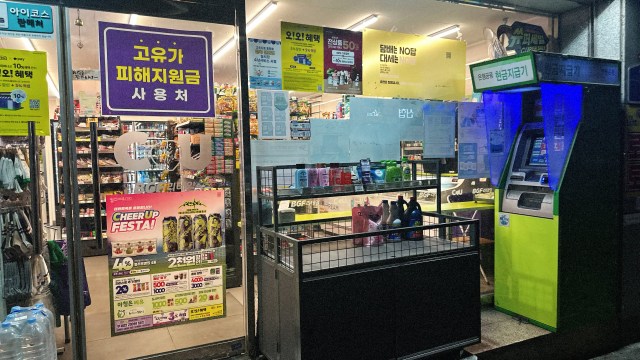
Korea has one of the highest concentrations of convenience stores of any country in the world. In any residential neighborhood, you will find one within a few minutes of walking in almost any direction. In busier areas, there are often two or three within sight of each other — different chains, different layouts, the same fundamental promise. They are open twenty-four hours a day, every day of the year, every public holiday included. At two in the morning they glow from the street like small, reliable beacons.

The Korean word is 편의점, pyeonuijeom. It translates directly as “convenience store,” but that phrase — for anyone who grew up with the kind of convenience stores found in most of the world — does not prepare you for what you are about to encounter.

Not Just Convenient

The convenience store in most countries is a place you visit when you need something and everywhere else is closed. It is adequate. It will have roughly what you need, at a slight premium, under lighting that flatters nothing. You make your purchase and leave. The transaction is the entire point.
The Korean 편의점 is a fundamentally different thing.
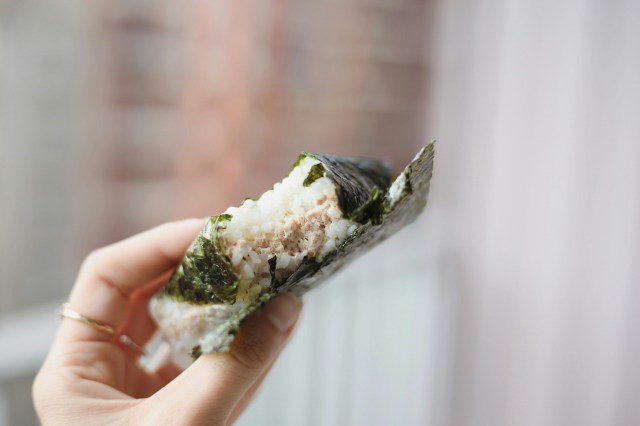
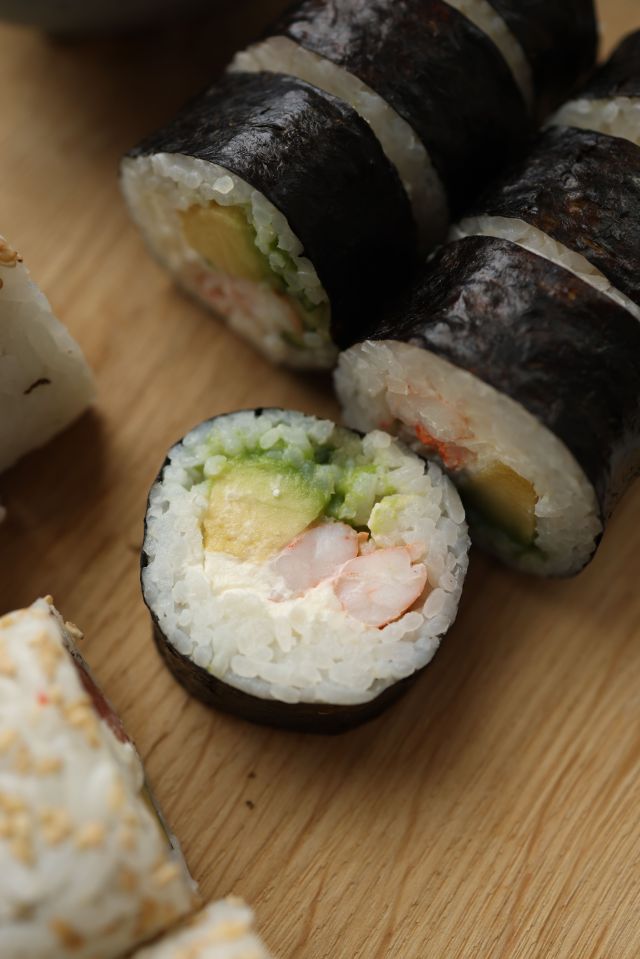
You can eat there — not as a last resort, but genuinely and well. The triangle kimbap, those neat wedge-shaped rice rolls wrapped in seaweed and filled with anything from tuna mayonnaise to spicy pork, are legitimately good — perfected through decades of small, incremental improvements. The instant ramyeon, made in the store’s hot water dispenser and eaten at the counter by the window, is exactly what you want at eleven at night after a long day. The egg salad sandwich, somehow, has inspired the kind of loyalty that people usually reserve for proper restaurants.
Beyond the food, the functionality keeps expanding. You can pay utility bills at the counter, print documents in the corner, pick up a package that arrived while you were out, top up a transit card, buy stamps, send a parcel, or purchase tickets to a concert happening this weekend. The Korean convenience store has absorbed a range of services that, in other countries, would require several separate errands to several separate places.

The Social Dimension

There is something about the Korean convenience store that functions as community infrastructure — something that goes well beyond the practical.
Walk past one at almost any hour and you will find people who are not in a hurry to leave. University students with laptops and cups of instant coffee, notebooks spread across the small tables. Office workers stopping in on the way home, standing at the counter for a few minutes, not quite ready to transition from the day. Groups of friends who have landed here for the evening — not because there is nowhere better to go, but because the convenience store has everything they need: food, drinks, warmth, no minimum order, and no one asking them to move along.

The stores stay open through every holiday, every typhoon warning, every late-running night. For people who work unusual hours — hospital staff, delivery workers, anyone whose schedule does not follow the conventional daytime — the convenience store is reliably there when almost nothing else is. For the large and growing number of people in Korean cities who live alone, it is often the first stop of the morning and the last of the night. After a while, the staff learn your face.

What You Find Inside

Walking into a well-stocked Korean convenience store for the first time can feel mildly overwhelming. The range is considerably broader than the category suggests.
The refrigerated section typically holds fresh salads, rice dishes packaged for immediate consumption, pre-made soups ready for the microwave near the entrance, and a selection of yogurts, flavored milks, and fresh juices far more varied than most Western convenience stores offer. The shelf-stable section goes beyond the expected ramen and crackers into dozens of dried snack formats, seasoned nuts, rice crackers in varieties that reward careful study, and chocolate products that reflect a national confectionery culture with high standards.
The beverage aisle is its own category. An extraordinary range of canned coffees — from light and sweet to surprisingly nuanced — sits alongside flavored waters, plant milks, traditional grain drinks, energy drinks, and a rotating selection of beer, soju, and makgeolli that varies by store. Seasonal products appear for a few weeks and then disappear, and their disappearance is noticed. People have genuine feelings about which seasonal items will return.

Near the register, there is almost always a small section for the things you forgot or did not know you needed: toothbrushes, phone chargers, eye drops, pain medication, socks sealed in plastic for the day you have walked too far. The Korean convenience store is built on a quiet understanding: that people’s needs are unpredictable, and they should not have to plan everything in advance.

Why This Specific Form Developed Here

Korea’s convenience store culture did not happen by accident. It grew from a particular combination of urban density, working patterns, and a national expectation of quality that shapes Korean consumer culture at every level.
Korean cities, Seoul especially, are extraordinarily dense. Most residents live in apartments in neighborhoods where retail and residential use sit side by side at close range. The kind of accessible, well-stocked neighborhood store that density requires developed naturally alongside the housing, until the convenience store became as much a part of the urban fabric as a park or a subway entrance.
Long working hours have shaped the culture too. When your schedule does not reliably end before shops close, a store that is open at seven in the morning and equally open at two in the morning — one that sells a decent meal and a reasonable coffee at either hour — fills a need that would otherwise go unmet.

And quality matters here in a way it does not everywhere. Korean consumers are demanding, and the convenience store chains have had to earn their loyalty rather than simply benefit from a lack of alternatives. The triangle kimbap is good because millions of people eat one every day and would notice the moment it was not.

The Two in the Morning Version

There is a particular quality to a Korean convenience store at two in the morning that is worth describing on its own terms.
The lighting is the same as it is at noon. The shelves are full, or close to it. The refrigerators hum steadily. There is almost always at least one other person — eating at the standing counter, deliberating over the drinks, or simply standing in the warm light for a moment before heading back out into the night.
The store does not ask what brings you here at this hour. It is open. You are in it. That is enough.
For anyone who has ever needed something at two in the morning — food, or a lit room, or just the quiet reassurance that something normal is still open — this is genuinely not a small thing. The Korean convenience store is reliable in a way that very few things in a city manage to be: without conditions, without exceptions, without fail.
Foreigners who visit Korea often name the convenience store as one of the most unexpectedly good parts of the trip. Koreans would say: this is just how it works. Both are right. And the fact that both can be right at the same time says something about how well this particular thing has been done.

반찬 — The Small Dishes That Are the Whole Point

No single dish is the star. That is the whole point.


When you sit down at a Korean restaurant, the food arrives before you order.

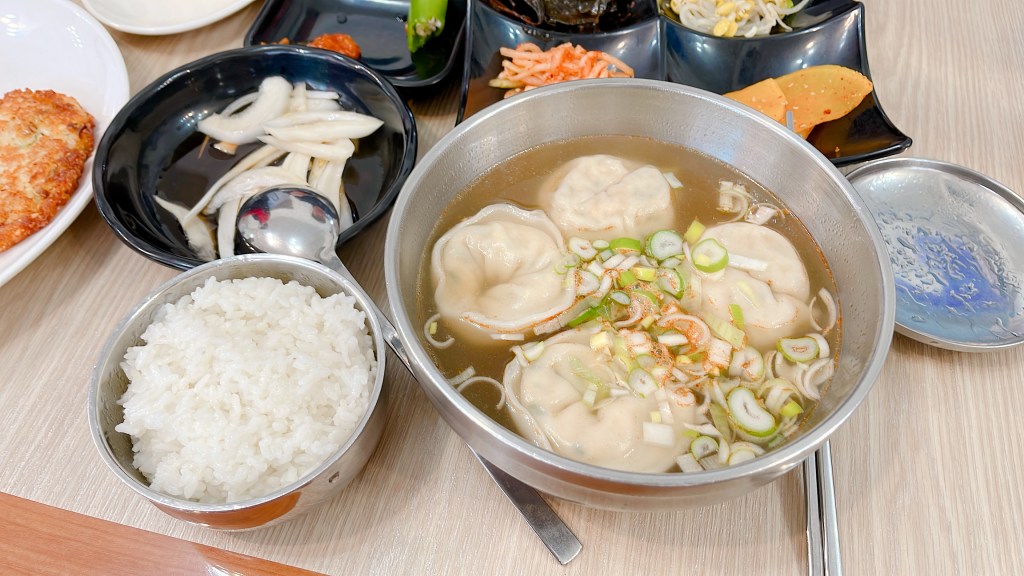
You have barely opened the menu. Maybe you have not even looked at it yet. And already the table is filling — small dish after small dish appearing from nowhere, covering the surface in front of you, creating a landscape of ceramic bowls before you have made a single decision about what you want to eat.

If this is your first time at a Korean table, you might glance around to see if there has been some mistake. There has not.

These are the 반찬, banchan. And once you understand what they are — and what they are not — you will never look at a meal quite the same way again.


What Banchan Are

Banchan are not appetizers. They are not the Korean version of bread before the main course, or chips and dip to keep you occupied while the kitchen works. They are not side dishes in the sense that a side salad is a side dish — secondary, subordinate, something you eat around the edges of the real thing.

Banchan are the real thing. More precisely, they are the table itself — the living, ongoing collection of small dishes that surrounds the rice and soup at the center of a Korean meal. The specific dishes shift with the season, the region, the cook, and the occasion. But the structure never changes. Many small things. Arranged together. Eaten in rotation. Each one adjusting, balancing, deepening the others.

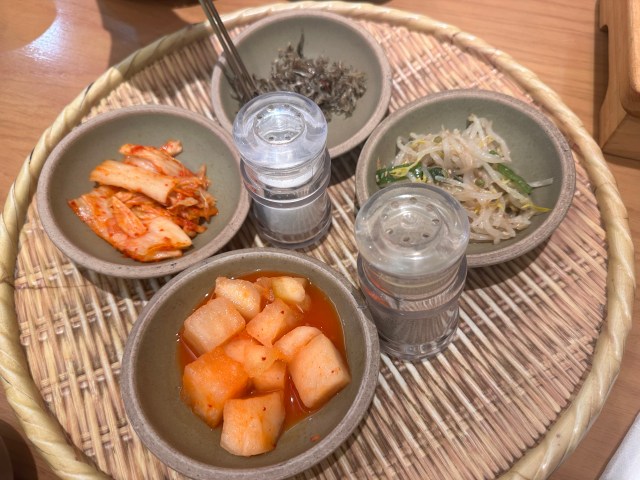
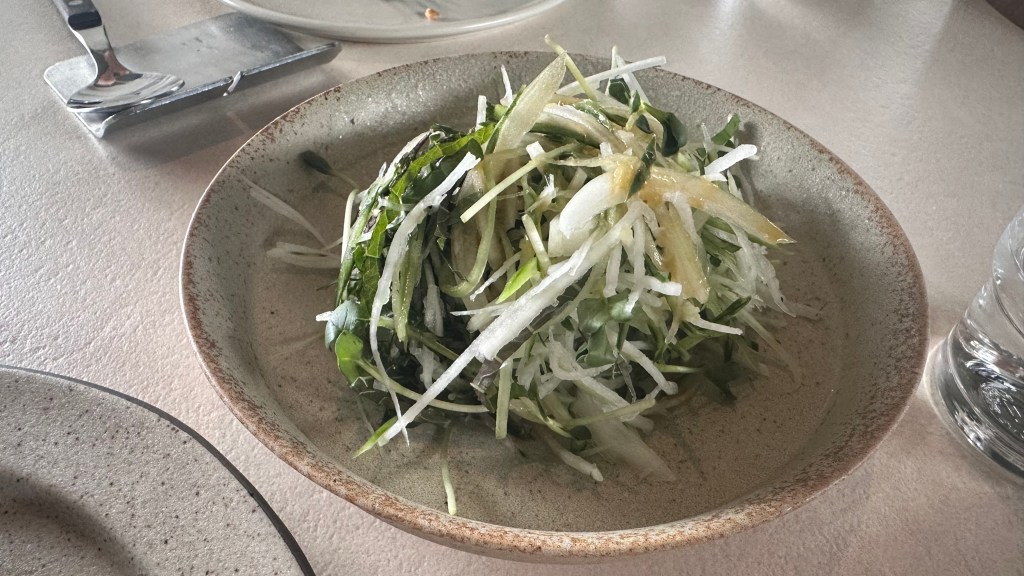
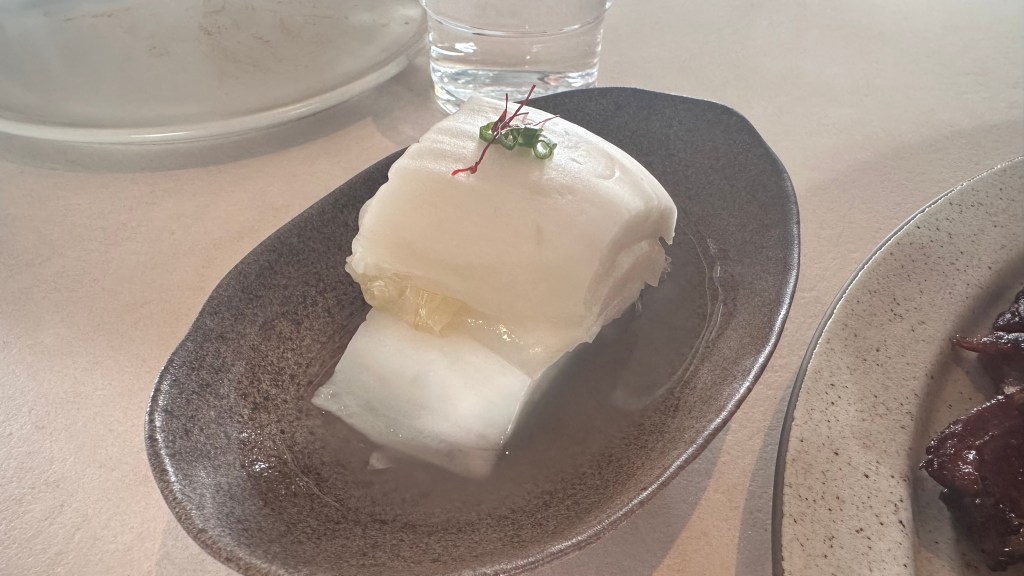
Consider what might appear. Spinach blanched until just tender, then dressed in sesame oil and a little garlic — soft and nutty, barely seasoned. Radish sliced into fine matchsticks and pickled bright with vinegar and sugar, sharp and clean against the tongue. Dried anchovies pan-fried with soy sauce and a touch of honey until they are glazed and faintly crisp at the edges. Bean sprouts, simply dressed. A small mound of braised lotus root — dark, sweet, yielding. And kimchi, always kimchi, which is less a single dish than an entire category of its own, appearing in a dozen forms depending on who made it and when.

This is a modest spread. At a restaurant known for its generosity, or in a home where the cooking is taken seriously, the table might hold twelve dishes, or fifteen. Each one different in color, texture, temperature, and flavor. All of them, together, comprising a single meal.

The Rule About Refills

Here is the part that stops most first-time visitors cold: banchan are refillable. Free of charge. Without being asked.

You finish the spinach — more spinach appears. You work through the kimchi — someone brings more kimchi. The table does not empty as the meal progresses. It replenishes. The dishes that run low are quietly replaced, and the meal continues at the same abundance with which it began.

To someone accustomed to restaurant dining where every item is measured, portioned, and priced, this can feel genuinely disorienting. And then — within minutes — quite wonderful. The meal is not organized around scarcity. Running out of something before you are done eating is not a state the table is designed to reach.

In Korea, none of this registers as remarkable. Of course there is more when you finish. Why would there not be? The logic works from the opposite direction: it is not that refills are provided as a generous extra, but that allowing the table to run empty before the meal is over would be a failure of hospitality so basic it barely needs naming.

That difference — a meal designed around abundance rather than portions — changes the entire feeling of eating.


The Table as Conversation

Once the initial surprise settles, something else becomes clear: the banchan are not just many dishes. They are a system. And the system has its own logic.

Korean food is not built around a single centerpiece surrounded by lesser supporting elements. There is no hierarchy at the Korean table, no star, no main event that everything else serves. The meal is structured more like a conversation — many voices present at once, none trying to dominate, meaning emerging from how they play against each other rather than from any one of them alone.

You eat in rotation. A bite of the braised tofu, then a spoonful of rice, then kimchi, then perhaps the spinach, then back. No one tells you the order. There is no correct sequence. The banchan are simply present, all of them, and you move between them as the meal develops. The pairings are personal and intuitive, and they shift as your appetite changes.

This creates something a single-entrée meal cannot: flavor distributed across time. The sourness of the kimchi cuts through richness. The sesame spinach settles the salt of the anchovy. The sweetness of the lotus root arrives exactly when you want a pause. The table feels calibrated — though it was never consciously designed that way. It is the product of a culinary tradition working out, over centuries, how flavors should move through a meal.


The Work That Made It

There is something easy to miss in all of this, and it has to do with who made the banchan — and what it took.

A Korean meal of real quality requires considerable preparation that happens largely out of sight. Kimchi ferments for days, weeks, sometimes months. Braised dishes need time on the stove. Preserved and dried items are prepared well in advance. By the time anyone sits down to eat, the meal has been in progress for longer than the meal itself will last.

None of this is announced. The dishes simply appear, and they are simply good, and the meal proceeds. This invisible labor is part of what banchan are. The number of dishes, their variety, the care that went into each one — all of it communicates something about how the cook regards the people at the table. A spread of twelve carefully prepared banchan is a form of expression that does not require words. It says: you are worth this. I made time for this. Sit down.

That is not a small thing to say without saying it.


Banchan Today

Modern Korean households maintain the banchan tradition differently than they once did. Fewer people prepare a full spread from scratch every day. Ready-made banchan are sold at every supermarket and specialty shop — jars of kimchi, containers of seasoned vegetables, braised side dishes packed and chilled and ready to open. Families buy some and make some, and the balance shifts depending on the day and the season.

But the structure itself persists — many dishes, shared across the table, refilled as needed — because it is, quite simply, a better way to eat. It builds in variety without effort. It slows the meal down. It makes dinner less transactional and more like something happening together. And it allows for something that a single plated dish cannot: the pleasure of moving between flavors, of building a meal out of small decisions made across the course of an hour, of finishing and realizing the food was still interesting at the end.

The kimchi, made well, is extraordinary. The seasoned spinach is worth coming back to. The crispy anchovies are better than they have any right to be. The table is worth sitting down at not only because of what it means, but because of what it tastes like.


No Single Star

The organizing principle of the Korean table — no hierarchy, no centerpiece, no single dish placed above the others — is both an aesthetic choice and a quiet philosophy. A meal as conversation rather than monologue. Something shared rather than individual. Abundance that does not call attention to itself.

It is the accumulated answer of a very long culinary tradition to the question of how people should eat together.

The answer: together, from the same dishes, in rotation, with enough for everyone, and more when it runs out.

No single dish is the star.

That is, in the end, the whole point.