부산역 — What It Feels Like to Arrive

The KTX takes two and a half hours from Seoul. The city starts before the train stops.

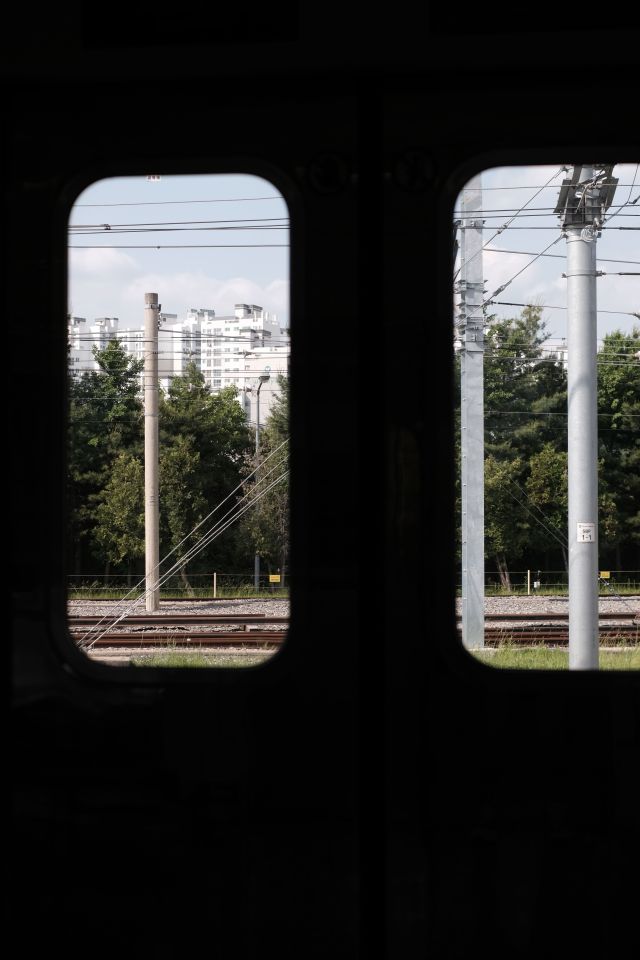
There is a specific moment, on the train from Seoul to Busan, when the character of the landscape outside the window changes. For most of the journey, the view is familiar to anyone who has traveled by train in Korea — rice fields, low hills, occasional towns, the highway running roughly parallel — and then, somewhere in the final forty minutes, the terrain becomes more emphatic. The hills are steeper. The coastline appears. The urban density that announces a major city starts to build, and through it, glimpses of water become visible in directions you weren’t expecting.
The train does not announce this. It simply happens, and if you are paying attention, you feel the arrival before the station.
The Train

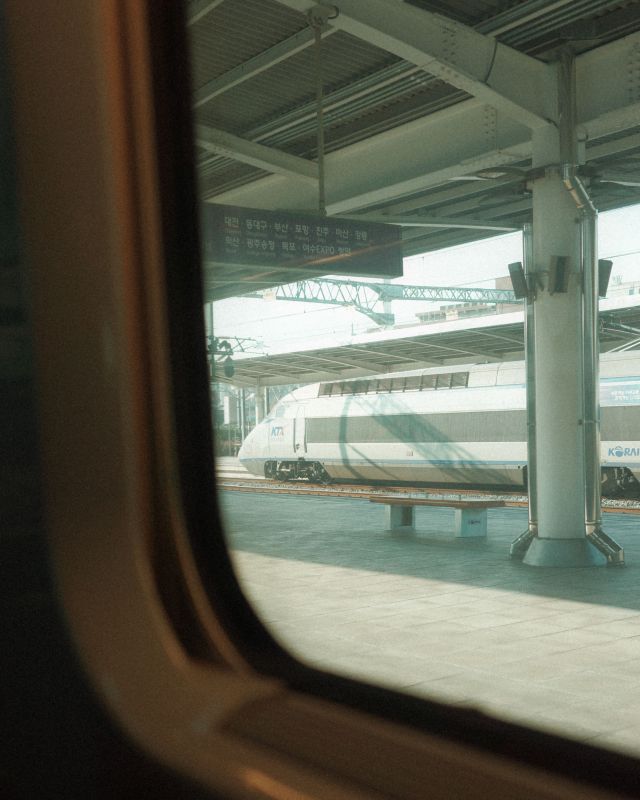
The KTX — Korea Train eXpress — began operations in April 2004, connecting Seoul and Busan with the country’s first high-speed rail line. The journey that had taken several hours on conventional rail was reduced to approximately two and a half hours on the fastest services, a change significant enough that it altered how Koreans think about the distance between the two cities.
Before the KTX, Seoul and Busan were connected by what felt like a substantial gap. The cities were close enough to belong to the same country in an obvious sense but distant enough that the journey was an event — something you planned, something that took most of a day. After the KTX, they became the kind of distance that allows a day trip: leave Seoul in the morning, spend the afternoon in Busan, return in the evening. This is not how most people use the train, but the fact that it is possible changed the psychological distance between the two cities in ways that are hard to quantify and easy to feel.
The SRT — a competing high-speed rail service operating on a separate line from Suseo Station in eastern Seoul — began operations in 2016 and offers journeys that can be slightly faster on some services, depending on stops. The practical difference between the KTX and the SRT for most passengers is mainly the departure station, with Suseo being more convenient for some parts of Seoul and less so for others.
Busan Station Itself

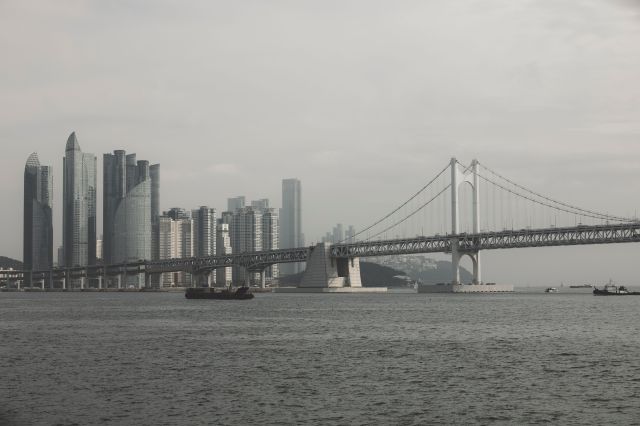
Busan Station sits in Dong-gu, the old central district of the city, close to the waterfront and adjacent to the Choryang neighborhood — one of the areas where the character of pre-development Busan is most visible in the streets, the scale of the buildings, and the demographics of the people going about their day.
The station is the largest train station in the southern part of Korea and, for most international visitors, the first physical space of Busan they encounter. It has been rebuilt and expanded multiple times across its history, with the current structure reflecting a more recent renovation. Outside the main entrance, the view is urban and somewhat unremarkable — a busy intersection, the adjacent Texas Street area known for its nightlife and international community, mountains visible in the background above the rooftops.
What is harder to see from the outside is that the station sits within walking distance of several of the neighborhoods that contain the most historical depth in Busan. Jagalchi Market is reachable by subway in one stop. Gukje Market is close. The Choryang neighborhood directly behind the station has a hillside of pastel-colored houses — the Huinnyeoul Cultural Village is on Yeongdo, but the hillside visible from the Choryang side of the station has its own version of this stacked-on-steep-terrain quality that is characteristic of areas where wartime refugees built without planning permission.
The Particular Quality of the Arrival

What makes arriving at Busan Station by train different from arriving anywhere else in Korea is harder to articulate than the journey time.
Part of it is the compression of the journey. Two and a half hours is long enough for a transition — long enough to finish something you were doing, to eat, to sleep briefly, to read a chapter of something — but short enough that the destination feels earned rather than exhausted. You arrive in Busan with capacity remaining, which is different from the feeling of arriving somewhere after a flight or a very long drive.
Part of it is the view from the train in the final approach, which — as mentioned — changes character in a specific way. Seoul does not prepare you for Busan’s terrain. The hills are steeper. The harbor appears between buildings and then disappears again. When the train finally pulls into the station and the doors open, the air is different. It usually smells like the sea before anything else.
Part of it is simply the sense, in any city with a strong character, of arriving somewhere that knows what it is. Busan has this quality. It is not trying to be Seoul. It is not trying to be anything other than what it is, which is a port city that has been organized around water and industry and mountains and people moving through for a very long time.
Leaving and Coming Back

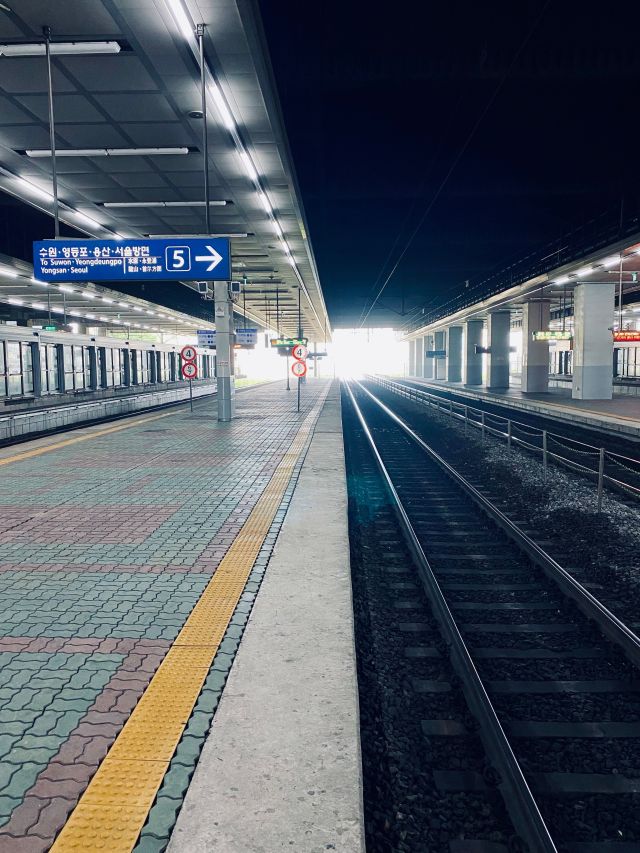
For people who live in Busan, the station has a particular meaning that is about returning rather than arriving. Going to Seoul — for work, for meetings, for medical appointments, for things that the second city does not yet have in the quantity the first city does — is a regular fact of life for a certain segment of Busan’s population. The return journey, arriving back in Busan from Seoul at the end of a long day, has its own specific quality.
Busan residents who have spent the day in Seoul — in the meetings, in the pace, in the noise and the scale and the indefinite ambition of the capital — report that arriving back in Busan involves a particular kind of settling. The city is smaller. The light is coastal rather than inland. The air smells like I mentioned before. You are back somewhere that knows where it ends.
This might be the truest version of what Busan Station means to the people who use it regularly: not the beginning of something, but the return to something. A place that signals you are back where you are from.
편의점 — Why Korea’s Convenience Stores Are in a Category of Their Own

Foreigners call it a discovery. Locals call it Tuesday.

If you have spent any time in Korea, you already know exactly what I am about to describe. If you have not, what follows will either sound like an exaggeration or like a place you need to visit as soon as possible.
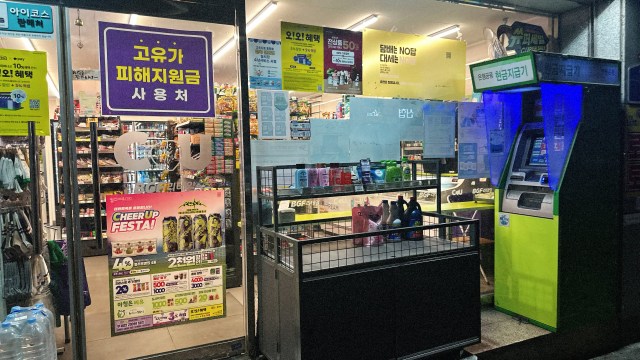
Korea has one of the highest concentrations of convenience stores of any country in the world. In any residential neighborhood, you will find one within a few minutes of walking in almost any direction. In busier areas, there are often two or three within sight of each other — different chains, different layouts, the same fundamental promise. They are open twenty-four hours a day, every day of the year, every public holiday included. At two in the morning they glow from the street like small, reliable beacons.

The Korean word is 편의점, pyeonuijeom. It translates directly as “convenience store,” but that phrase — for anyone who grew up with the kind of convenience stores found in most of the world — does not prepare you for what you are about to encounter.

Not Just Convenient

The convenience store in most countries is a place you visit when you need something and everywhere else is closed. It is adequate. It will have roughly what you need, at a slight premium, under lighting that flatters nothing. You make your purchase and leave. The transaction is the entire point.
The Korean 편의점 is a fundamentally different thing.
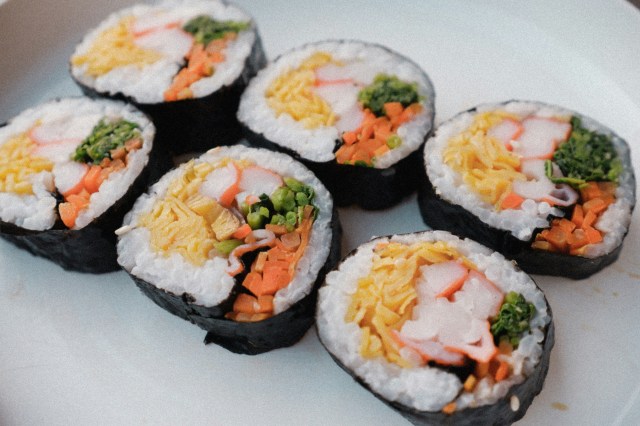
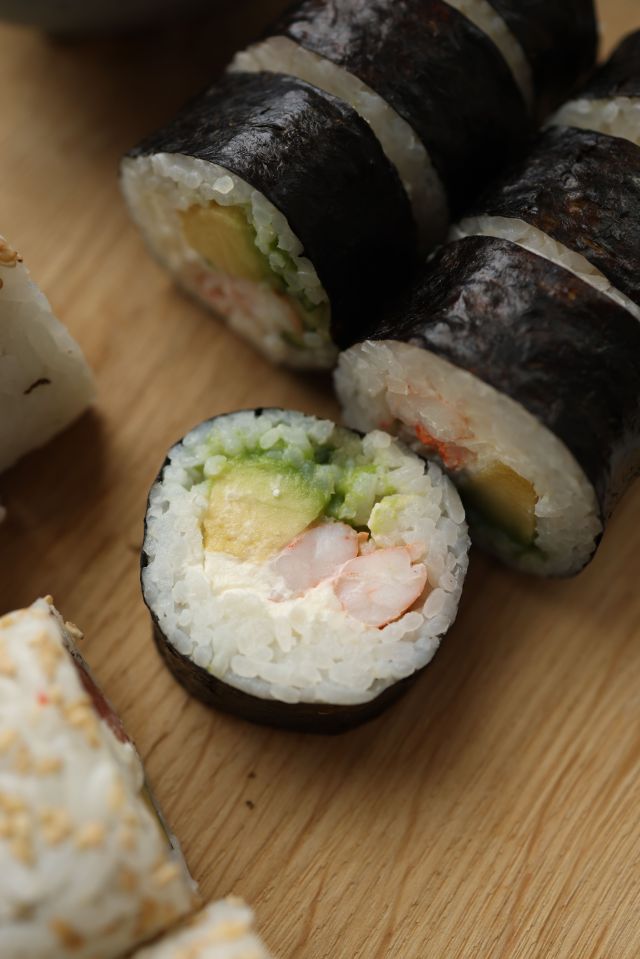
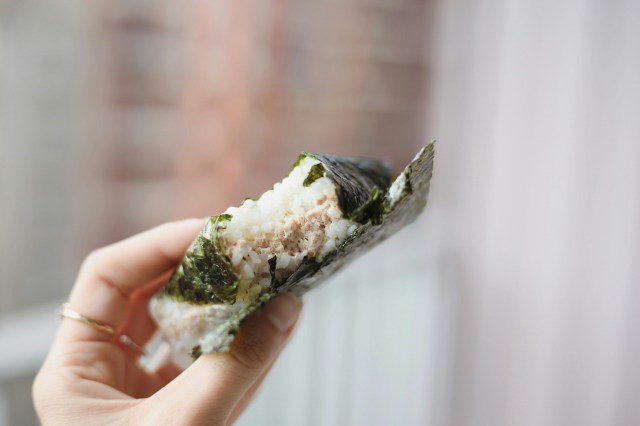
You can eat there — not as a last resort, but genuinely and well. The triangle kimbap, those neat wedge-shaped rice rolls wrapped in seaweed and filled with anything from tuna mayonnaise to spicy pork, are legitimately good — perfected through decades of small, incremental improvements. The instant ramyeon, made in the store’s hot water dispenser and eaten at the counter by the window, is exactly what you want at eleven at night after a long day. The egg salad sandwich, somehow, has inspired the kind of loyalty that people usually reserve for proper restaurants.
Beyond the food, the functionality keeps expanding. You can pay utility bills at the counter, print documents in the corner, pick up a package that arrived while you were out, top up a transit card, buy stamps, send a parcel, or purchase tickets to a concert happening this weekend. The Korean convenience store has absorbed a range of services that, in other countries, would require several separate errands to several separate places.

The Social Dimension

There is something about the Korean convenience store that functions as community infrastructure — something that goes well beyond the practical.
Walk past one at almost any hour and you will find people who are not in a hurry to leave. University students with laptops and cups of instant coffee, notebooks spread across the small tables. Office workers stopping in on the way home, standing at the counter for a few minutes, not quite ready to transition from the day. Groups of friends who have landed here for the evening — not because there is nowhere better to go, but because the convenience store has everything they need: food, drinks, warmth, no minimum order, and no one asking them to move along.

The stores stay open through every holiday, every typhoon warning, every late-running night. For people who work unusual hours — hospital staff, delivery workers, anyone whose schedule does not follow the conventional daytime — the convenience store is reliably there when almost nothing else is. For the large and growing number of people in Korean cities who live alone, it is often the first stop of the morning and the last of the night. After a while, the staff learn your face.

What You Find Inside

Walking into a well-stocked Korean convenience store for the first time can feel mildly overwhelming. The range is considerably broader than the category suggests.
The refrigerated section typically holds fresh salads, rice dishes packaged for immediate consumption, pre-made soups ready for the microwave near the entrance, and a selection of yogurts, flavored milks, and fresh juices far more varied than most Western convenience stores offer. The shelf-stable section goes beyond the expected ramen and crackers into dozens of dried snack formats, seasoned nuts, rice crackers in varieties that reward careful study, and chocolate products that reflect a national confectionery culture with high standards.
The beverage aisle is its own category. An extraordinary range of canned coffees — from light and sweet to surprisingly nuanced — sits alongside flavored waters, plant milks, traditional grain drinks, energy drinks, and a rotating selection of beer, soju, and makgeolli that varies by store. Seasonal products appear for a few weeks and then disappear, and their disappearance is noticed. People have genuine feelings about which seasonal items will return.

Near the register, there is almost always a small section for the things you forgot or did not know you needed: toothbrushes, phone chargers, eye drops, pain medication, socks sealed in plastic for the day you have walked too far. The Korean convenience store is built on a quiet understanding: that people’s needs are unpredictable, and they should not have to plan everything in advance.

Why This Specific Form Developed Here

Korea’s convenience store culture did not happen by accident. It grew from a particular combination of urban density, working patterns, and a national expectation of quality that shapes Korean consumer culture at every level.
Korean cities, Seoul especially, are extraordinarily dense. Most residents live in apartments in neighborhoods where retail and residential use sit side by side at close range. The kind of accessible, well-stocked neighborhood store that density requires developed naturally alongside the housing, until the convenience store became as much a part of the urban fabric as a park or a subway entrance.
Long working hours have shaped the culture too. When your schedule does not reliably end before shops close, a store that is open at seven in the morning and equally open at two in the morning — one that sells a decent meal and a reasonable coffee at either hour — fills a need that would otherwise go unmet.

And quality matters here in a way it does not everywhere. Korean consumers are demanding, and the convenience store chains have had to earn their loyalty rather than simply benefit from a lack of alternatives. The triangle kimbap is good because millions of people eat one every day and would notice the moment it was not.

The Two in the Morning Version

There is a particular quality to a Korean convenience store at two in the morning that is worth describing on its own terms.
The lighting is the same as it is at noon. The shelves are full, or close to it. The refrigerators hum steadily. There is almost always at least one other person — eating at the standing counter, deliberating over the drinks, or simply standing in the warm light for a moment before heading back out into the night.
The store does not ask what brings you here at this hour. It is open. You are in it. That is enough.
For anyone who has ever needed something at two in the morning — food, or a lit room, or just the quiet reassurance that something normal is still open — this is genuinely not a small thing. The Korean convenience store is reliable in a way that very few things in a city manage to be: without conditions, without exceptions, without fail.
Foreigners who visit Korea often name the convenience store as one of the most unexpectedly good parts of the trip. Koreans would say: this is just how it works. Both are right. And the fact that both can be right at the same time says something about how well this particular thing has been done.