No single dish is the star. That is the whole point.
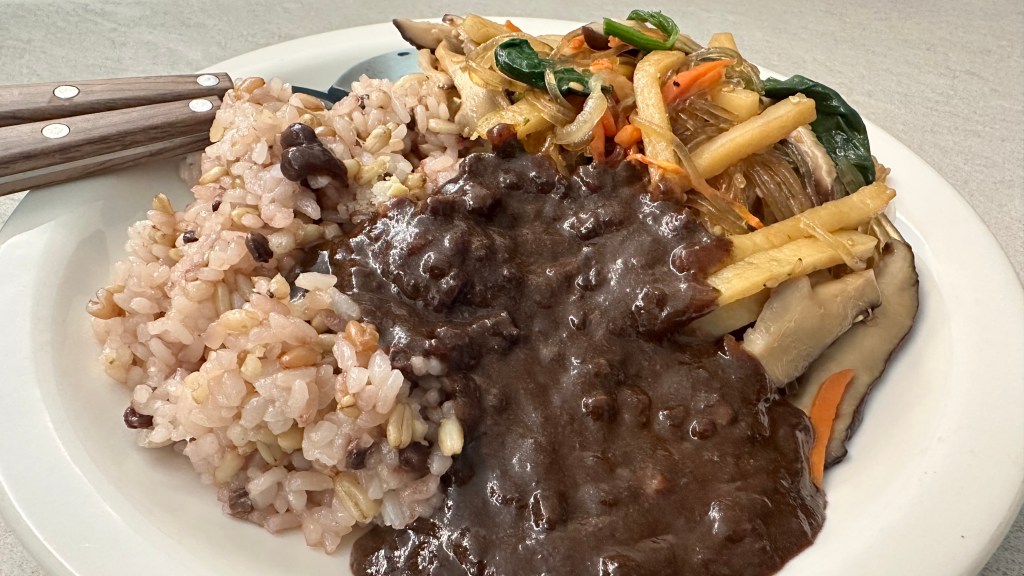
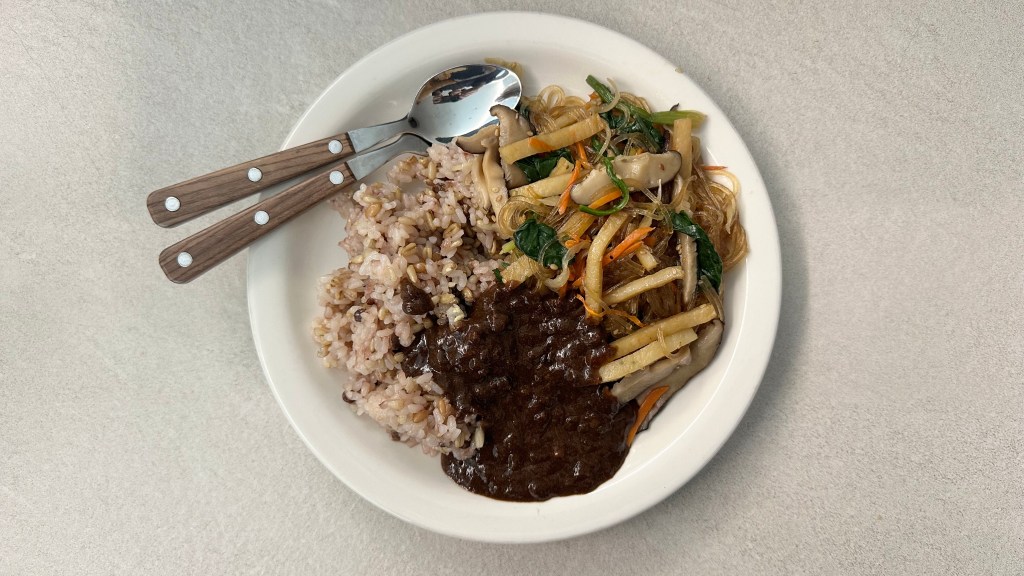
When you sit down at a Korean restaurant, the food arrives before you order.
You have barely opened the menu. Maybe you have not even looked at it yet. And already the table is filling — small dish after small dish appearing from nowhere, covering the surface in front of you, creating a landscape of ceramic bowls before you have made a single decision about what you want to eat.
If this is your first time at a Korean table, you might glance around to see if there has been some mistake. There has not.
These are the 반찬, banchan. And once you understand what they are — and what they are not — you will never look at a meal quite the same way again.
What Banchan Are
Banchan are not appetizers. They are not the Korean version of bread before the main course, or chips and dip to keep you occupied while the kitchen works. They are not side dishes in the sense that a side salad is a side dish — secondary, subordinate, something you eat around the edges of the real thing.
Banchan are the real thing. More precisely, they are the table itself — the living, ongoing collection of small dishes that surrounds the rice and soup at the center of a Korean meal. The specific dishes shift with the season, the region, the cook, and the occasion. But the structure never changes. Many small things. Arranged together. Eaten in rotation. Each one adjusting, balancing, deepening the others.
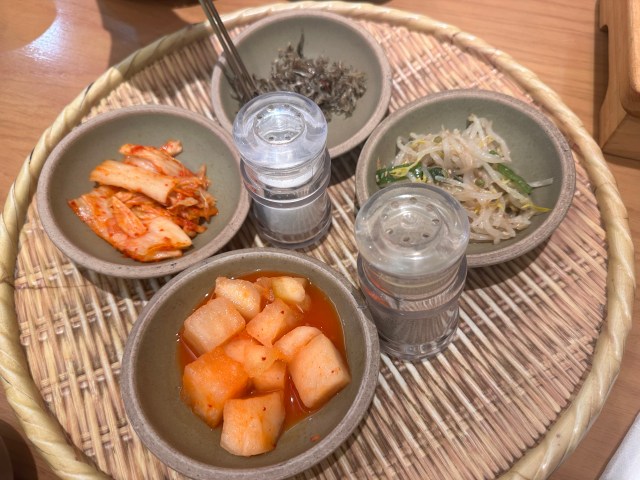
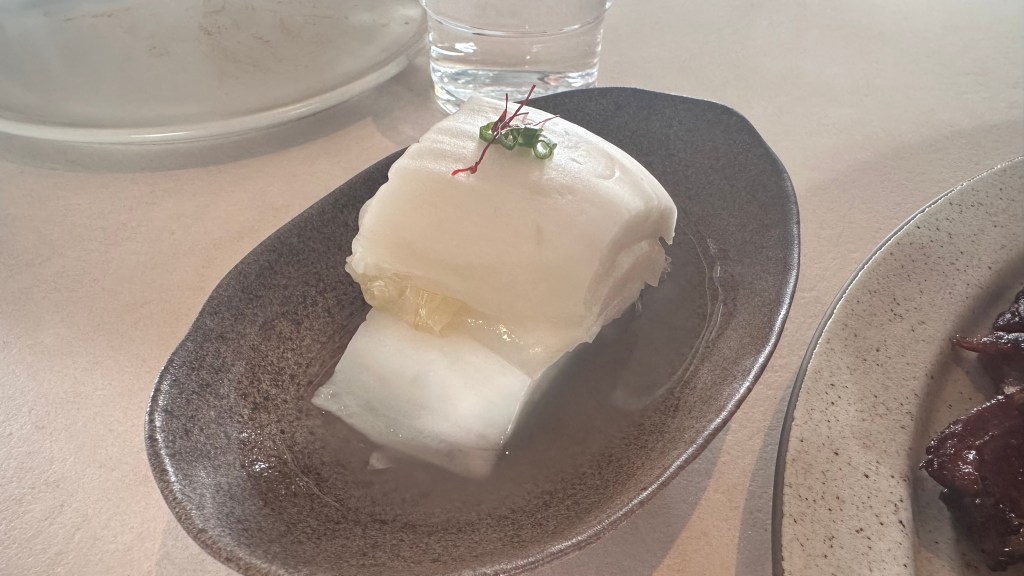
Consider what might appear. Spinach blanched until just tender, then dressed in sesame oil and a little garlic — soft and nutty, barely seasoned. Radish sliced into fine matchsticks and pickled bright with vinegar and sugar, sharp and clean against the tongue. Dried anchovies pan-fried with soy sauce and a touch of honey until they are glazed and faintly crisp at the edges. Bean sprouts, simply dressed. A small mound of braised lotus root — dark, sweet, yielding. And kimchi, always kimchi, which is less a single dish than an entire category of its own, appearing in a dozen forms depending on who made it and when.
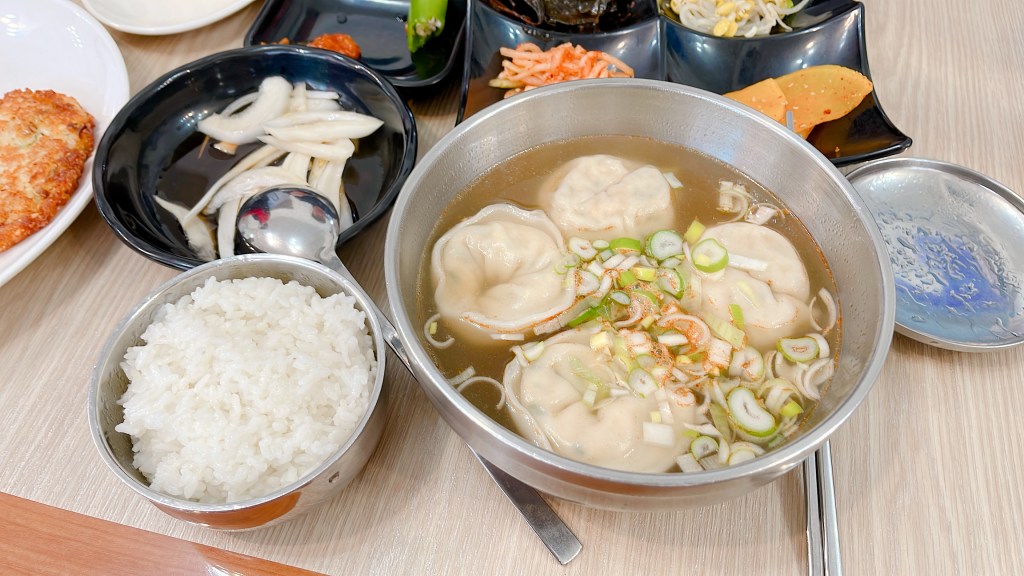
This is a modest spread. At a restaurant known for its generosity, or in a home where the cooking is taken seriously, the table might hold twelve dishes, or fifteen. Each one different in color, texture, temperature, and flavor. All of them, together, comprising a single meal.
The Rule About Refills
Here is the part that stops most first-time visitors cold: banchan are refillable. Free of charge. Without being asked.
You finish the spinach — more spinach appears. You work through the kimchi — someone brings more kimchi. The table does not empty as the meal progresses. It replenishes. The dishes that run low are quietly replaced, and the meal continues at the same abundance with which it began.
To someone accustomed to restaurant dining where every item is measured, portioned, and priced, this can feel genuinely disorienting. And then — within minutes — quite wonderful. The meal is not organized around scarcity. Running out of something before you are done eating is not a state the table is designed to reach.
In Korea, none of this registers as remarkable. Of course there is more when you finish. Why would there not be? The logic works from the opposite direction: it is not that refills are provided as a generous extra, but that allowing the table to run empty before the meal is over would be a failure of hospitality so basic it barely needs naming.
That difference — a meal designed around abundance rather than portions — changes the entire feeling of eating.
The Table as Conversation
Once the initial surprise settles, something else becomes clear: the banchan are not just many dishes. They are a system. And the system has its own logic.
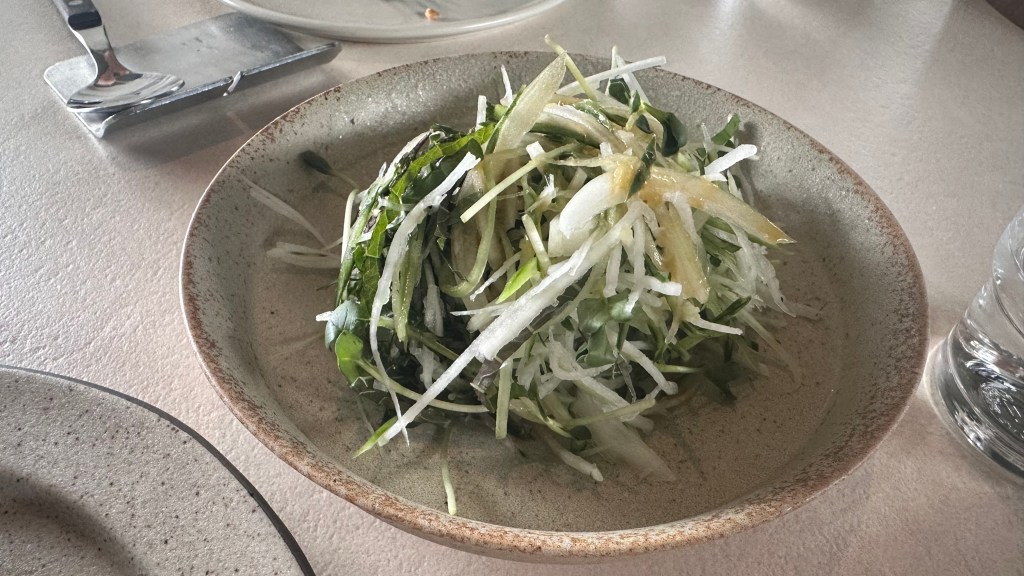
Korean food is not built around a single centerpiece surrounded by lesser supporting elements. There is no hierarchy at the Korean table, no star, no main event that everything else serves. The meal is structured more like a conversation — many voices present at once, none trying to dominate, meaning emerging from how they play against each other rather than from any one of them alone.
You eat in rotation. A bite of the braised tofu, then a spoonful of rice, then kimchi, then perhaps the spinach, then back. No one tells you the order. There is no correct sequence. The banchan are simply present, all of them, and you move between them as the meal develops. The pairings are personal and intuitive, and they shift as your appetite changes.
This creates something a single-entrée meal cannot: flavor distributed across time. The sourness of the kimchi cuts through richness. The sesame spinach settles the salt of the anchovy. The sweetness of the lotus root arrives exactly when you want a pause. The table feels calibrated — though it was never consciously designed that way. It is the product of a culinary tradition working out, over centuries, how flavors should move through a meal.
The Work That Made It
There is something easy to miss in all of this, and it has to do with who made the banchan — and what it took.
A Korean meal of real quality requires considerable preparation that happens largely out of sight. Kimchi ferments for days, weeks, sometimes months. Braised dishes need time on the stove. Preserved and dried items are prepared well in advance. By the time anyone sits down to eat, the meal has been in progress for longer than the meal itself will last.
None of this is announced. The dishes simply appear, and they are simply good, and the meal proceeds. This invisible labor is part of what banchan are. The number of dishes, their variety, the care that went into each one — all of it communicates something about how the cook regards the people at the table. A spread of twelve carefully prepared banchan is a form of expression that does not require words. It says: you are worth this. I made time for this. Sit down.
That is not a small thing to say without saying it.
Banchan Today
Modern Korean households maintain the banchan tradition differently than they once did. Fewer people prepare a full spread from scratch every day. Ready-made banchan are sold at every supermarket and specialty shop — jars of kimchi, containers of seasoned vegetables, braised side dishes packed and chilled and ready to open. Families buy some and make some, and the balance shifts depending on the day and the season.
But the structure itself persists — many dishes, shared across the table, refilled as needed — because it is, quite simply, a better way to eat. It builds in variety without effort. It slows the meal down. It makes dinner less transactional and more like something happening together. And it allows for something that a single plated dish cannot: the pleasure of moving between flavors, of building a meal out of small decisions made across the course of an hour, of finishing and realizing the food was still interesting at the end.
The kimchi, made well, is extraordinary. The seasoned spinach is worth coming back to. The crispy anchovies are better than they have any right to be. The table is worth sitting down at not only because of what it means, but because of what it tastes like.
No Single Star
The organizing principle of the Korean table — no hierarchy, no centerpiece, no single dish placed above the others — is both an aesthetic choice and a quiet philosophy. A meal as conversation rather than monologue. Something shared rather than individual. Abundance that does not call attention to itself.
It is the accumulated answer of a very long culinary tradition to the question of how people should eat together.
The answer: together, from the same dishes, in rotation, with enough for everyone, and more when it runs out.
No single dish is the star.
That is, in the end, the whole point.

