편의점 — Why Korea’s Convenience Stores Are in a Category of Their Own

Foreigners call it a discovery. Locals call it Tuesday.

If you have spent any time in Korea, you already know exactly what I am about to describe. If you have not, what follows will either sound like an exaggeration or like a place you need to visit as soon as possible.
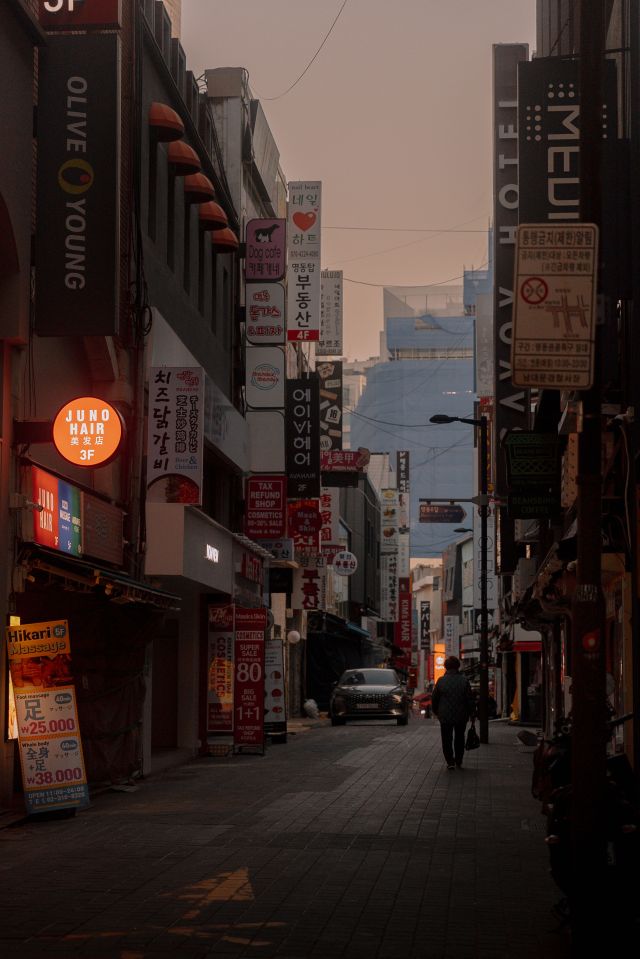
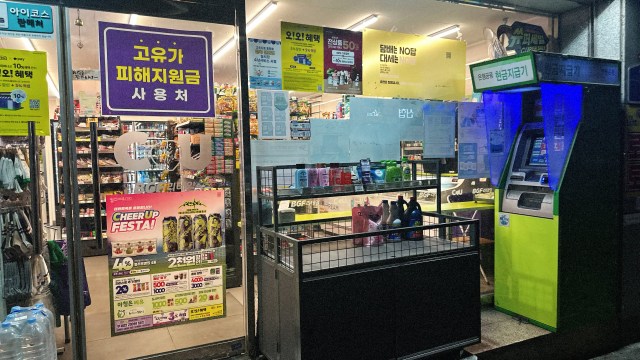
Korea has one of the highest concentrations of convenience stores of any country in the world. In any residential neighborhood, you will find one within a few minutes of walking in almost any direction. In busier areas, there are often two or three within sight of each other — different chains, different layouts, the same fundamental promise. They are open twenty-four hours a day, every day of the year, every public holiday included. At two in the morning they glow from the street like small, reliable beacons.

The Korean word is 편의점, pyeonuijeom. It translates directly as “convenience store,” but that phrase — for anyone who grew up with the kind of convenience stores found in most of the world — does not prepare you for what you are about to encounter.
Not Just Convenient

The convenience store in most countries is a place you visit when you need something and everywhere else is closed. It is adequate. It will have roughly what you need, at a slight premium, under lighting that flatters nothing. You make your purchase and leave. The transaction is the entire point.
The Korean 편의점 is a fundamentally different thing.
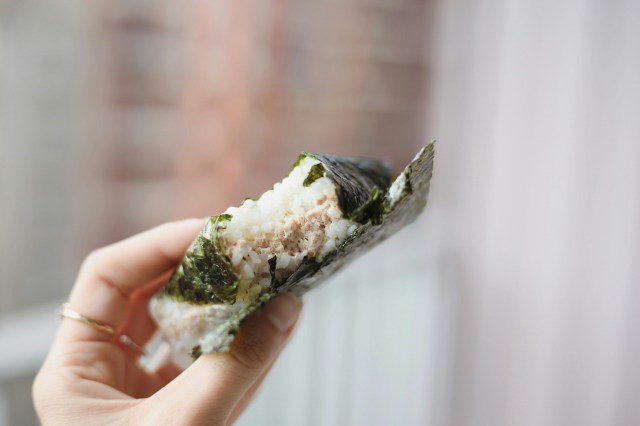
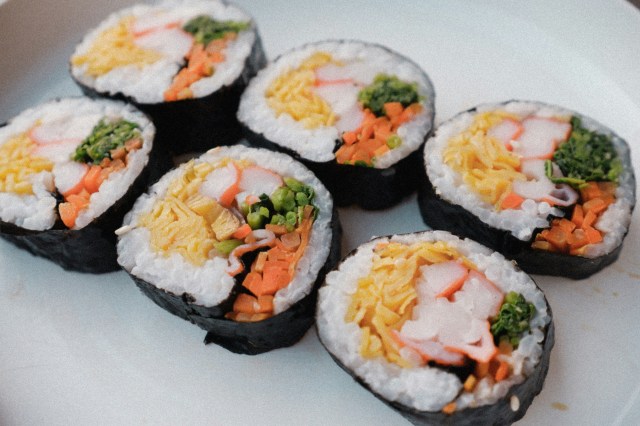
You can eat there — not as a last resort, but genuinely and well. The triangle kimbap, those neat wedge-shaped rice rolls wrapped in seaweed and filled with anything from tuna mayonnaise to spicy pork, are legitimately good — perfected through decades of small, incremental improvements. The instant ramyeon, made in the store’s hot water dispenser and eaten at the counter by the window, is exactly what you want at eleven at night after a long day. The egg salad sandwich, somehow, has inspired the kind of loyalty that people usually reserve for proper restaurants.
Beyond the food, the functionality keeps expanding. You can pay utility bills at the counter, print documents in the corner, pick up a package that arrived while you were out, top up a transit card, buy stamps, send a parcel, or purchase tickets to a concert happening this weekend. The Korean convenience store has absorbed a range of services that, in other countries, would require several separate errands to several separate places.
The Social Dimension

There is something about the Korean convenience store that functions as community infrastructure — something that goes well beyond the practical.
Walk past one at almost any hour and you will find people who are not in a hurry to leave. University students with laptops and cups of instant coffee, notebooks spread across the small tables. Office workers stopping in on the way home, standing at the counter for a few minutes, not quite ready to transition from the day. Groups of friends who have landed here for the evening — not because there is nowhere better to go, but because the convenience store has everything they need: food, drinks, warmth, no minimum order, and no one asking them to move along.

The stores stay open through every holiday, every typhoon warning, every late-running night. For people who work unusual hours — hospital staff, delivery workers, anyone whose schedule does not follow the conventional daytime — the convenience store is reliably there when almost nothing else is. For the large and growing number of people in Korean cities who live alone, it is often the first stop of the morning and the last of the night. After a while, the staff learn your face.
What You Find Inside

Walking into a well-stocked Korean convenience store for the first time can feel mildly overwhelming. The range is considerably broader than the category suggests.
The refrigerated section typically holds fresh salads, rice dishes packaged for immediate consumption, pre-made soups ready for the microwave near the entrance, and a selection of yogurts, flavored milks, and fresh juices far more varied than most Western convenience stores offer. The shelf-stable section goes beyond the expected ramen and crackers into dozens of dried snack formats, seasoned nuts, rice crackers in varieties that reward careful study, and chocolate products that reflect a national confectionery culture with high standards.
The beverage aisle is its own category. An extraordinary range of canned coffees — from light and sweet to surprisingly nuanced — sits alongside flavored waters, plant milks, traditional grain drinks, energy drinks, and a rotating selection of beer, soju, and makgeolli that varies by store. Seasonal products appear for a few weeks and then disappear, and their disappearance is noticed. People have genuine feelings about which seasonal items will return.

Near the register, there is almost always a small section for the things you forgot or did not know you needed: toothbrushes, phone chargers, eye drops, pain medication, socks sealed in plastic for the day you have walked too far. The Korean convenience store is built on a quiet understanding: that people’s needs are unpredictable, and they should not have to plan everything in advance.
Why This Specific Form Developed Here

Korea’s convenience store culture did not happen by accident. It grew from a particular combination of urban density, working patterns, and a national expectation of quality that shapes Korean consumer culture at every level.
Korean cities, Seoul especially, are extraordinarily dense. Most residents live in apartments in neighborhoods where retail and residential use sit side by side at close range. The kind of accessible, well-stocked neighborhood store that density requires developed naturally alongside the housing, until the convenience store became as much a part of the urban fabric as a park or a subway entrance.
Long working hours have shaped the culture too. When your schedule does not reliably end before shops close, a store that is open at seven in the morning and equally open at two in the morning — one that sells a decent meal and a reasonable coffee at either hour — fills a need that would otherwise go unmet.

And quality matters here in a way it does not everywhere. Korean consumers are demanding, and the convenience store chains have had to earn their loyalty rather than simply benefit from a lack of alternatives. The triangle kimbap is good because millions of people eat one every day and would notice the moment it was not.
The Two in the Morning Version

There is a particular quality to a Korean convenience store at two in the morning that is worth describing on its own terms.
The lighting is the same as it is at noon. The shelves are full, or close to it. The refrigerators hum steadily. There is almost always at least one other person — eating at the standing counter, deliberating over the drinks, or simply standing in the warm light for a moment before heading back out into the night.
The store does not ask what brings you here at this hour. It is open. You are in it. That is enough.
For anyone who has ever needed something at two in the morning — food, or a lit room, or just the quiet reassurance that something normal is still open — this is genuinely not a small thing. The Korean convenience store is reliable in a way that very few things in a city manage to be: without conditions, without exceptions, without fail.
Foreigners who visit Korea often name the convenience store as one of the most unexpectedly good parts of the trip. Koreans would say: this is just how it works. Both are right. And the fact that both can be right at the same time says something about how well this particular thing has been done.


소확행 — The Korean Art of Small, Certain Happiness

You don’t find it. You notice it.

There is a particular kind of happiness that does not announce itself.

It does not arrive with fanfare or follow a long-awaited achievement. It does not require a special occasion, a checked item on a bucket list, or the resolution of some long-standing problem. It is already present in the ordinary texture of a day — in the warmth of something, the smell of something, the small rightness of a moment that could easily have passed without notice. In Korean, there is a word for exactly this. It is 소확행, pronounced soh-hwak-haeng, and once you know it, you will find yourself reaching for it often.

Where the Word Comes From
The phrase was not originally Korean. The writer Haruki Murakami coined it first, in Japanese — 小確幸, shōkakkō — in a 1986 essay titled Afternoon in the Islets of Langerhans. In it, he described the specific pleasure of folding freshly laundered underwear still warm from the dryer, of pulling a cold beer from the refrigerator at the end of a long run. Small, sensory, reliably good.
Korea discovered the phrase, translated it, and gradually made it its own. By the mid-2010s, 소확행 had found its way into everyday Korean speech — appearing in news articles, television programs, social media posts, and the ordinary back-and-forth of conversation. But something shifted slightly in the translation. The Japanese original carries a wistful undercurrent, a sense of finding small consolations in a world that does not always cooperate. The Korean version kept the smallness but leaned more heavily into the certainty. The full phrase is 소소하지만 확실한 행복 — small but certain happiness.

That single word, certain, changes everything about what the concept means.

What “Certain” Actually Means Here
Not surprising happiness — the kind that catches you off guard, that you cannot plan for. Not extraordinary happiness — the variety that requires years of effort, the alignment of many circumstances, and a fair amount of luck. Certain happiness: the kind you can count on. The kind that will be there tomorrow and the day after, because it does not depend on the world being especially generous.
This is the crucial distinction that separates 소확행 from vague ideas about gratitude or contentment. It is not asking you to lower your expectations or make peace with less than you want. It is pointing out something more specific: that there are reliable, repeatable pleasures available to you on any given day, and that most of us simply do not pay enough attention to notice them.

The warm cup in the morning. The right song arriving at the right moment. The first page of a book that immediately pulls you in. A piece of work, however small, that came out exactly the way you meant it to. These are not consolation prizes. They are pleasures with their own weight, their own value, entirely independent of whatever else is going on.

The Specificity of It
One of the things that makes 소확행 a genuinely useful concept, rather than another well-meaning platitude, is its insistence on the specific. The examples people reach for tend to be sensory and precise, not abstract.
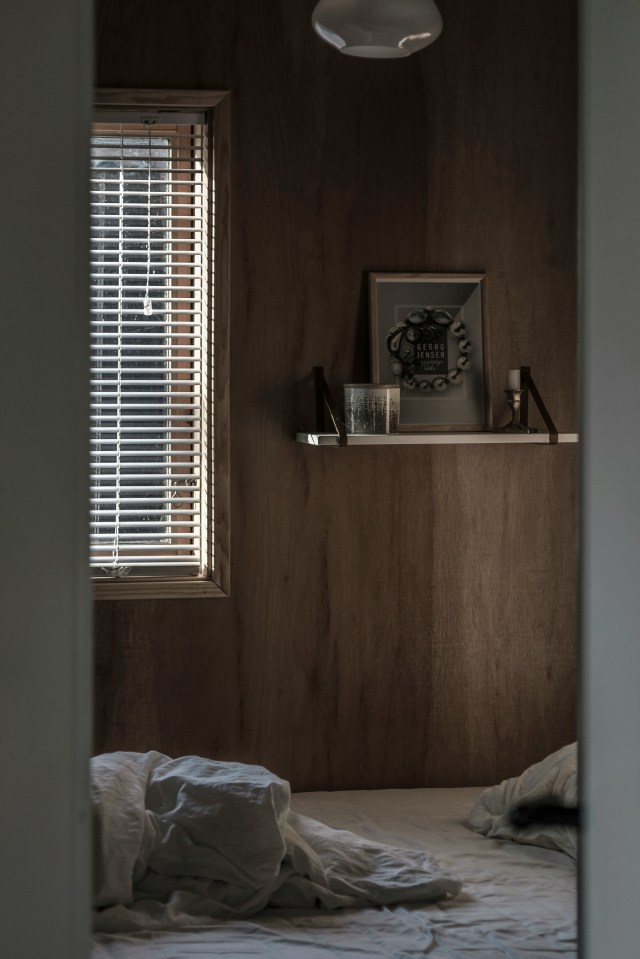
Not “time with loved ones,” which is meaningful but too broad to hold in your hands. More like: the half hour on a Sunday afternoon when the whole apartment is quiet and the light through the window is doing something particularly good. The moment you peel back the foil on a brand new jar of something and the seal breaks cleanly. A pen — a specific pen — that writes without any resistance, the way a pen should but rarely does. Your favorite mug, the one that fits your hands exactly right. The smell of rain on concrete just before a summer downpour.
A fresh sheet pulled from the dryer while it is still warm. The first sip of coffee before it has had a chance to cool. Finding that you remembered to charge your phone before it died. Finishing something small — a row of stitches, a clean counter, a message you had been putting off for three days.

The precision matters. 소확행 is not about cultivating a general sense of thankfulness for the big things. It is about noticing the small ones, specifically and by name.

A Word That Arrived at the Right Moment
소확행 did not become popular by accident. It emerged at a particular moment in Korean cultural life — a time when many people, especially younger generations, were feeling the weight of expectation in a very specific way.
South Korea built one of the most remarkable economies of the twentieth century, and it did so at speed. The cultural disposition known as 빨리빨리 — roughly translated as “hurry, hurry,” an orientation toward speed and efficiency that runs through Korean working life — was part of the engine of that growth. It produced results. It also produced exhaustion.
By the 2010s, a generation of young Koreans was coming of age in a society whose demands had not scaled back even as circumstances had become more difficult. Housing was expensive. Competition was intense. The large milestones — stable employment, financial security, the kind of future their parents had described — felt increasingly distant. Into this atmosphere, 소확행 arrived with something that felt almost radical: the suggestion that happiness did not need to wait.

The concept did not tell anyone to stop wanting things, or to abandon ambition, or to pretend the difficulties were not real. It offered something more modest and more immediately useful — the idea that the day in front of you also contains pleasure, if you are willing to look for it.

Why It Resonates Beyond Korea
소확행 is a Korean word, but it describes a feeling that belongs to everyone. Most cultures have developed some version of this idea — the Japanese kodawari, the precise attention to small details done well; the Danish hygge, the deliberate cultivation of warmth and coziness; the Swedish lagom, the satisfaction of just enough. These words have all traveled internationally, not because people needed to borrow a foreign concept but because they recognized in the word something they had always felt and never quite named.
소확행 travels for the same reason. The experience of noticing that a small, ordinary moment is genuinely good — and the desire for a word that honors that — is not uniquely Korean. It is just that Korean happened to find a particularly useful word for it.

What sets 소확행 apart from some of its Western equivalents is the emphasis on reliability. It is not about manufacturing coziness or engineering the perfect evening at home. It is about recognizing pleasures that are already there, that cost nothing to access, and that will be available again tomorrow. There is something almost practical about it — a mental accounting of the good that is already present, before you go looking elsewhere for it.

How to Practice It
The honest answer is that 소확행 does not really require a practice. It requires attention, which is slightly different.
The pleasures it points to do not need to be created. They are already threaded through most ordinary days. The cup of tea that is exactly the right temperature. The particular quality of morning light before the city fully wakes up. The feeling of finishing something that needed doing. The sound of rain against a window when you have nowhere to be.
What 소확행 asks — and the ask is quiet, not demanding — is simply that you notice when these things are happening. That you do not let them pass without at least briefly registering that yes, this is good. This is here. This counts.
In a world that tends to measure happiness in peaks and milestones, there is something quietly subversive about insisting on the value of the everyday. Not every good day needs to be remarkable. Some good days are just warm coffee and a room with enough light and a small piece of work that came out right.

That is enough. More than enough.

소확행 is not a philosophy, not a wellness strategy, not a trend. It is just a word for something most of us have felt and rarely stopped to name.
Small. Certain. Already here.