The KTX takes two and a half hours from Seoul. The city starts before the train stops.
There is a specific moment, on the train from Seoul to Busan, when the character of the landscape outside the window changes. For most of the journey, the view is familiar to anyone who has traveled by train in Korea — rice fields, low hills, occasional towns, the highway running roughly parallel — and then, somewhere in the final forty minutes, the terrain becomes more emphatic. The hills are steeper. The coastline appears. The urban density that announces a major city starts to build, and through it, glimpses of water become visible in directions you weren’t expecting.
The train does not announce this. It simply happens, and if you are paying attention, you feel the arrival before the station.
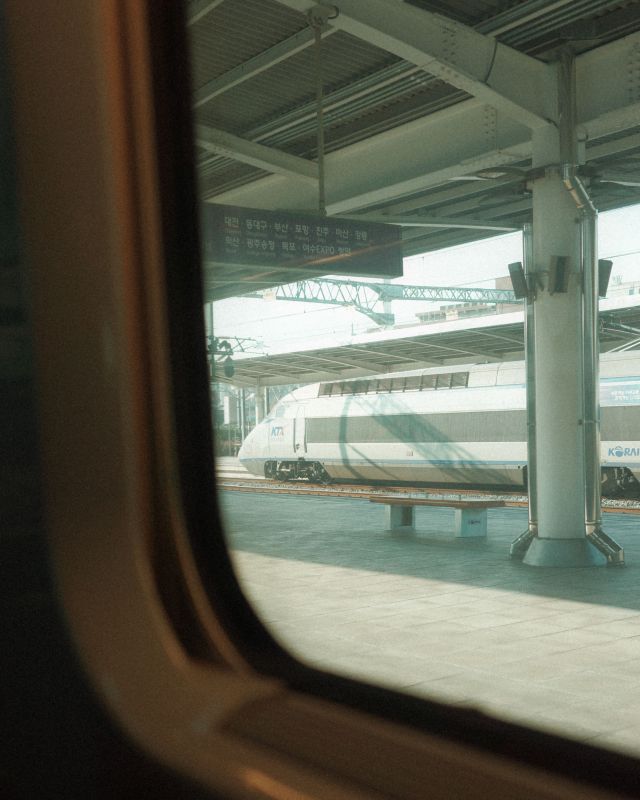
The Train
The KTX — Korea Train eXpress — began operations in April 2004, connecting Seoul and Busan with the country’s first high-speed rail line. The journey that had taken several hours on conventional rail was reduced to approximately two and a half hours on the fastest services, a change significant enough that it altered how Koreans think about the distance between the two cities.
Before the KTX, Seoul and Busan were connected by what felt like a substantial gap. The cities were close enough to belong to the same country in an obvious sense but distant enough that the journey was an event — something you planned, something that took most of a day. After the KTX, they became the kind of distance that allows a day trip: leave Seoul in the morning, spend the afternoon in Busan, return in the evening. This is not how most people use the train, but the fact that it is possible changed the psychological distance between the two cities in ways that are hard to quantify and easy to feel.
The SRT — a competing high-speed rail service operating on a separate line from Suseo Station in eastern Seoul — began operations in 2016 and offers journeys that can be slightly faster on some services, depending on stops. The practical difference between the KTX and the SRT for most passengers is mainly the departure station, with Suseo being more convenient for some parts of Seoul and less so for others.
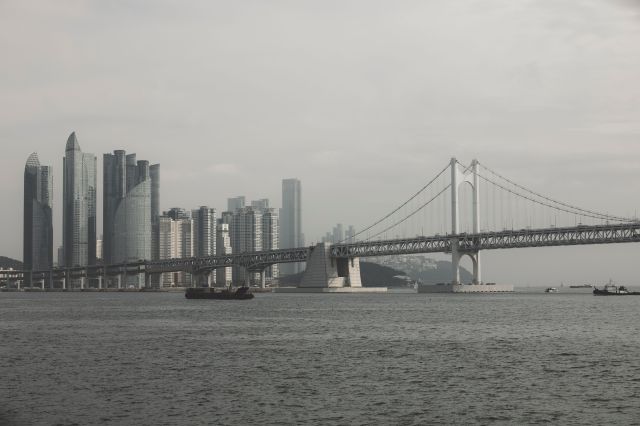
Busan Station Itself
Busan Station sits in Dong-gu, the old central district of the city, close to the waterfront and adjacent to the Choryang neighborhood — one of the areas where the character of pre-development Busan is most visible in the streets, the scale of the buildings, and the demographics of the people going about their day.
The station is the largest train station in the southern part of Korea and, for most international visitors, the first physical space of Busan they encounter. It has been rebuilt and expanded multiple times across its history, with the current structure reflecting a more recent renovation. Outside the main entrance, the view is urban and somewhat unremarkable — a busy intersection, the adjacent Texas Street area known for its nightlife and international community, mountains visible in the background above the rooftops.
What is harder to see from the outside is that the station sits within walking distance of several of the neighborhoods that contain the most historical depth in Busan. Jagalchi Market is reachable by subway in one stop. Gukje Market is close. The Choryang neighborhood directly behind the station has a hillside of pastel-colored houses — the Huinnyeoul Cultural Village is on Yeongdo, but the hillside visible from the Choryang side of the station has its own version of this stacked-on-steep-terrain quality that is characteristic of areas where wartime refugees built without planning permission.
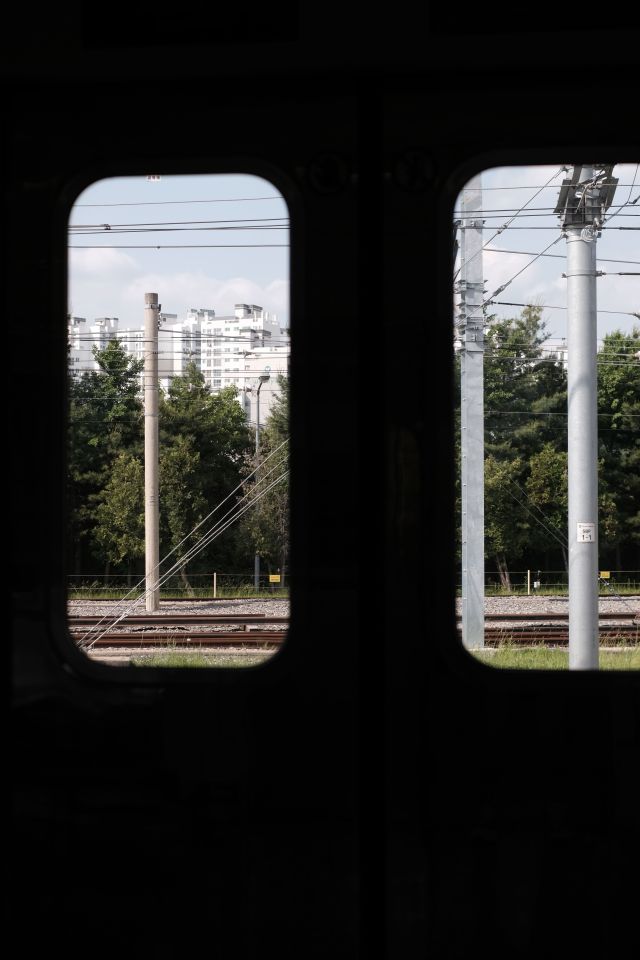
The Particular Quality of the Arrival
What makes arriving at Busan Station by train different from arriving anywhere else in Korea is harder to articulate than the journey time.
Part of it is the compression of the journey. Two and a half hours is long enough for a transition — long enough to finish something you were doing, to eat, to sleep briefly, to read a chapter of something — but short enough that the destination feels earned rather than exhausted. You arrive in Busan with capacity remaining, which is different from the feeling of arriving somewhere after a flight or a very long drive.
Part of it is the view from the train in the final approach, which — as mentioned — changes character in a specific way. Seoul does not prepare you for Busan’s terrain. The hills are steeper. The harbor appears between buildings and then disappears again. When the train finally pulls into the station and the doors open, the air is different. It usually smells like the sea before anything else.
Part of it is simply the sense, in any city with a strong character, of arriving somewhere that knows what it is. Busan has this quality. It is not trying to be Seoul. It is not trying to be anything other than what it is, which is a port city that has been organized around water and industry and mountains and people moving through for a very long time.
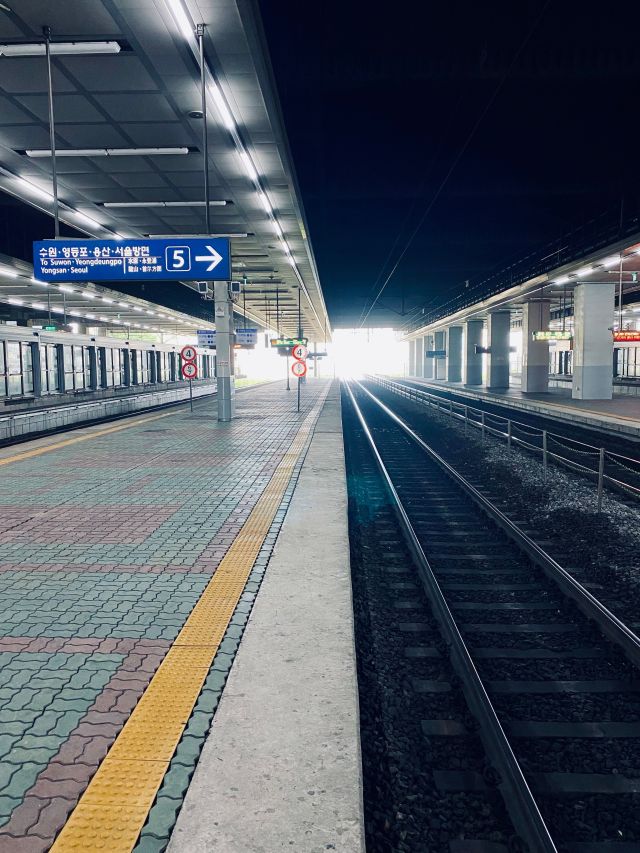
Leaving and Coming Back
For people who live in Busan, the station has a particular meaning that is about returning rather than arriving. Going to Seoul — for work, for meetings, for medical appointments, for things that the second city does not yet have in the quantity the first city does — is a regular fact of life for a certain segment of Busan’s population. The return journey, arriving back in Busan from Seoul at the end of a long day, has its own specific quality.
Busan residents who have spent the day in Seoul — in the meetings, in the pace, in the noise and the scale and the indefinite ambition of the capital — report that arriving back in Busan involves a particular kind of settling. The city is smaller. The light is coastal rather than inland. The air smells like I mentioned before. You are back somewhere that knows where it ends.
This might be the truest version of what Busan Station means to the people who use it regularly: not the beginning of something, but the return to something. A place that signals you are back where you are from.

