2026 · KOREAN CULTURE
A bowl that was never meant to be perfect.
There is a Korean ceramic tradition that the Western art world took centuries to notice. Not because it was hidden. But because its beauty asked something unusual of the viewer — the willingness to find grace in what is uneven, unpolished, and quietly alive.
It is called Buncheong.
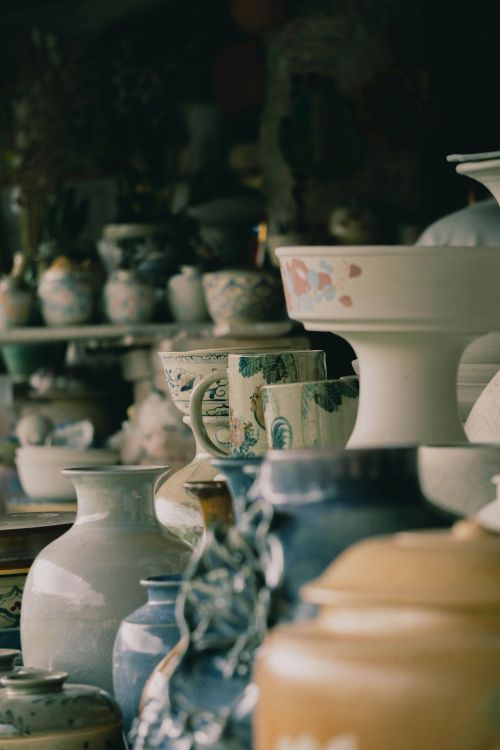
What is Buncheong?
Buncheong (분청사기) emerged in Korea during the early Joseon Dynasty, in the 15th century. It grew from the ashes of Goryeo celadon — a more refined, aristocratic tradition. What replaced it was something looser. More human.
Potters began coating dark clay with white slip — a liquid mixture of fine clay and water — then carving, stamping, or brushing patterns into the surface before it dried.
The result was never perfectly symmetrical. Never without variation. And that, it turns out, was exactly the point.
Why Japan fell in love with it first.
In the 15th and 16th centuries, Japanese tea masters discovered Buncheong bowls. They used them in tea ceremonies — not despite their imperfections, but because of them.
The philosophy of finding beauty in the incomplete found its ideal vessel in a Korean potter’s everyday bowl.
There is something quietly ironic about this. The bowls were ordinary objects in Korea. Functional. Unremarkable. And yet they became treasured objects in another culture’s highest ritual.
What makes a Buncheong bowl beautiful?
Look closely at one and you will notice:
The white slip is never perfectly even. The brush marks are visible — sometimes bold, sometimes hesitant. The stamp patterns repeat, but never exactly. The glaze pools differently in each curve.
It is a record of a hand moving through clay. Of a specific morning in a specific workshop, centuries ago. No two are the same. That is not a flaw. That is the whole conversation.
A last thought.
We live in a time of surfaces that are optimized, filtered, corrected. Buncheong asks a different question —
What if the mark left by the making is the most honest part of the thing?
That question, it turns out, never goes out of style.

