She dropped a piece of rice cake into a bowl of noodles. The accident is still being eaten today.
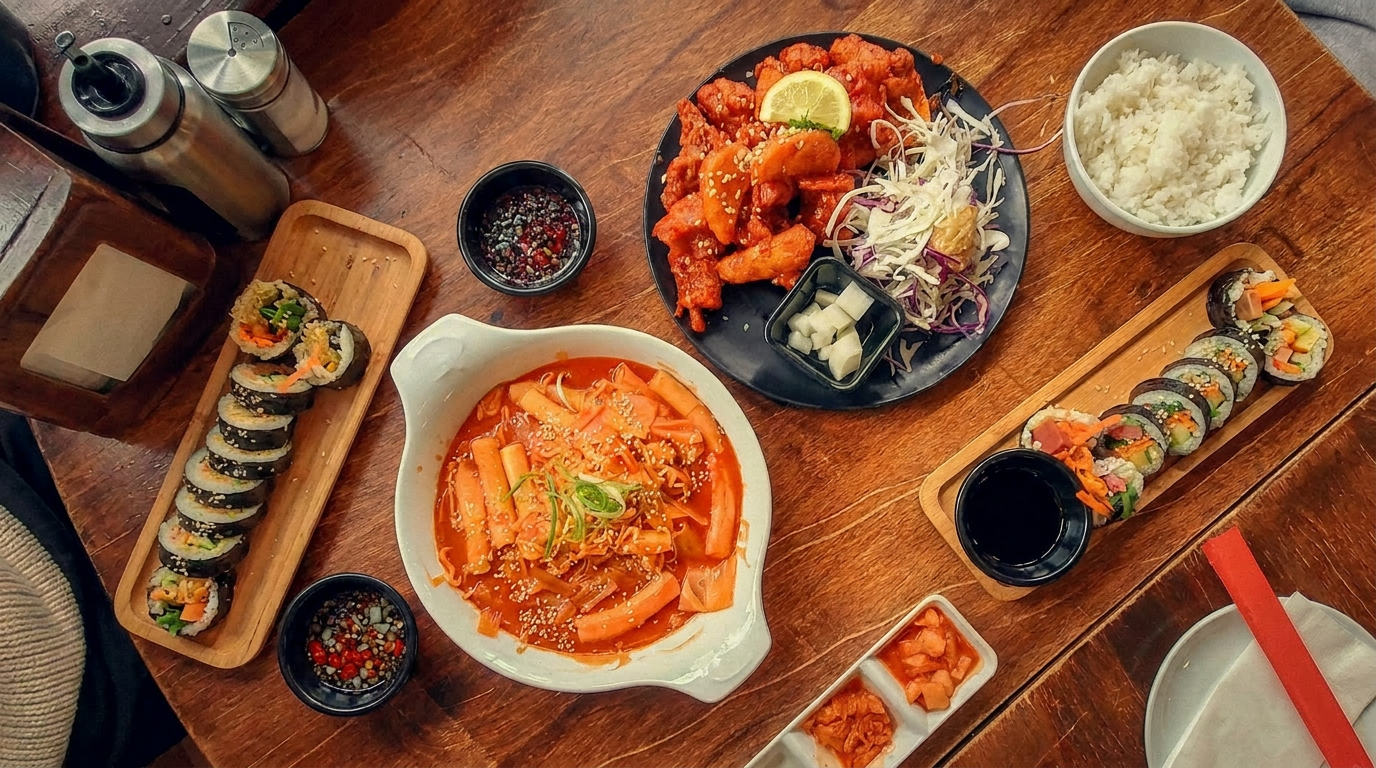
Some of the most iconic dishes in any cuisine were never designed. They were stumbled into, almost by accident, by someone who happened to be paying attention at the right moment. Tteokbokki — the glossy, fiery red rice cake dish now considered one of Korea’s defining street foods — is exactly that kind of accident, and the story behind it is well documented enough that you can visit the exact neighborhood where it happened.
Before the Red Sauce
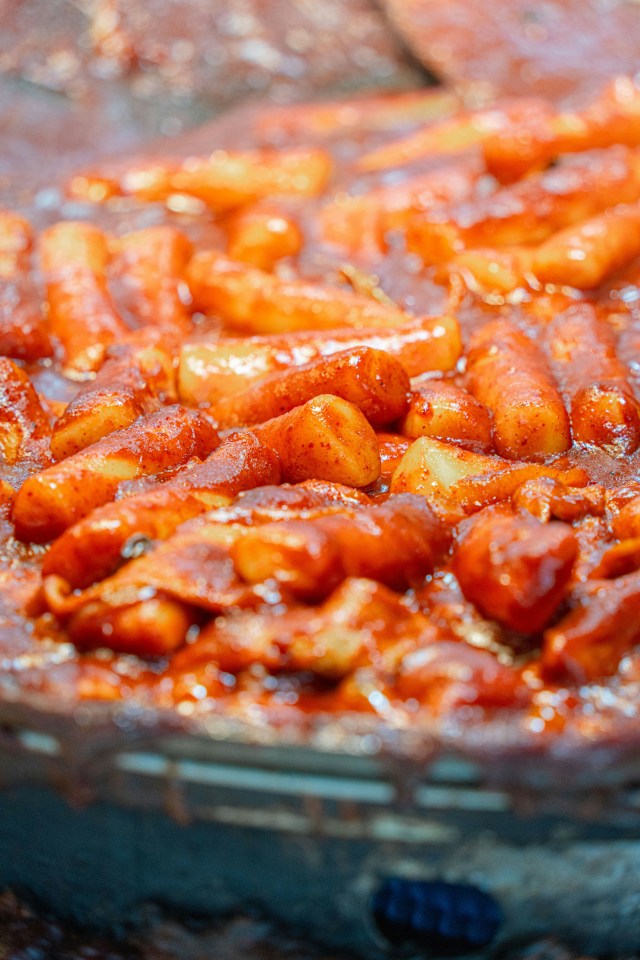
The dish tteokbokki did not begin as spicy, and it did not begin as street food. Long before gochujang ever touched a rice cake, there was gungjung-tteokbokki — literally “royal court tteokbokki” — a savory, non-spicy dish made by stir-frying rice cakes with soy sauce, marinated beef, and vegetables like carrot, onion, and mushroom. The earliest written record of this dish appears in an 1800s cookbook called Siuijeonseo, and its existence predates the introduction of chili peppers to the Korean peninsula in the mid-Joseon era. This was a refined dish, eaten by royalty, closer in spirit to japchae than to the street snack most people associate with the name today.
The version that conquered the world came much later, and it came from somewhere far less formal than a royal kitchen.
The Accident in Sindang-dong
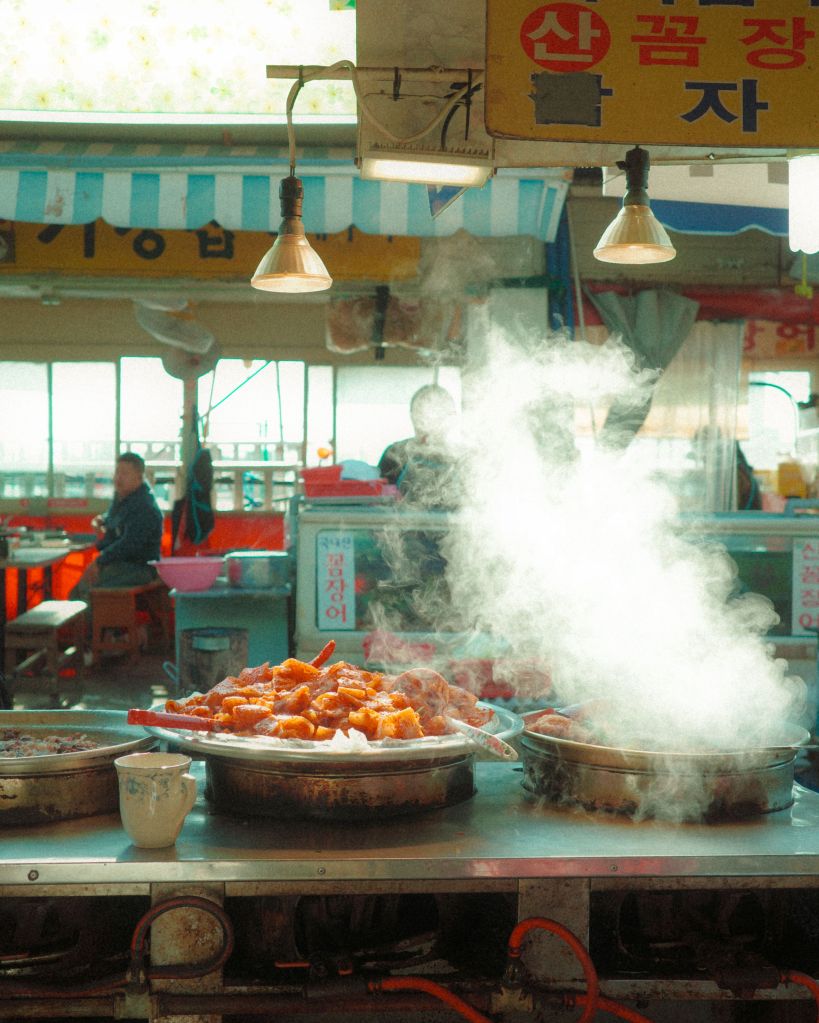
In 1953, the year the Korean War ended, a woman named Ma Bok-rim was in Seoul’s Sindang-dong neighborhood, attending the opening of a Chinese restaurant. As the story is most commonly told, a piece of garaetteok — the long, cylindrical white rice cake used in many Korean dishes — fell from a tray and landed in a bowl of jajangmyeon, the black bean noodle dish that remains a beloved comfort food across Korea. Ma tasted the rice cake coated in the dark, savory jajang sauce and immediately recognized that something good had happened by mistake.
She began experimenting with her own seasoning, ultimately landing on a combination of gochujang — Korean fermented chili paste — and chunjang, the black bean paste used in jajangmyeon. The result was sweet, spicy, and deeply savory all at once, clinging to the chewy rice cake in a way that felt entirely new. She set up a street stall in a Sindang-dong alley with little more than a charcoal stove and a tin pot, and the dish caught on almost immediately.
By the 1960s and 1970s, the area around her original stall had become what Seoulites now call Sindang-dong Tteokbokki Town — a dense cluster of restaurants, several of which still operate today, built entirely around the dish Ma Bok-rim improvised by accident. She continued running her business and passed her recipe down to her daughters-in-law before her death in 2011, at the age of 91.
What the Dish Is Made Of
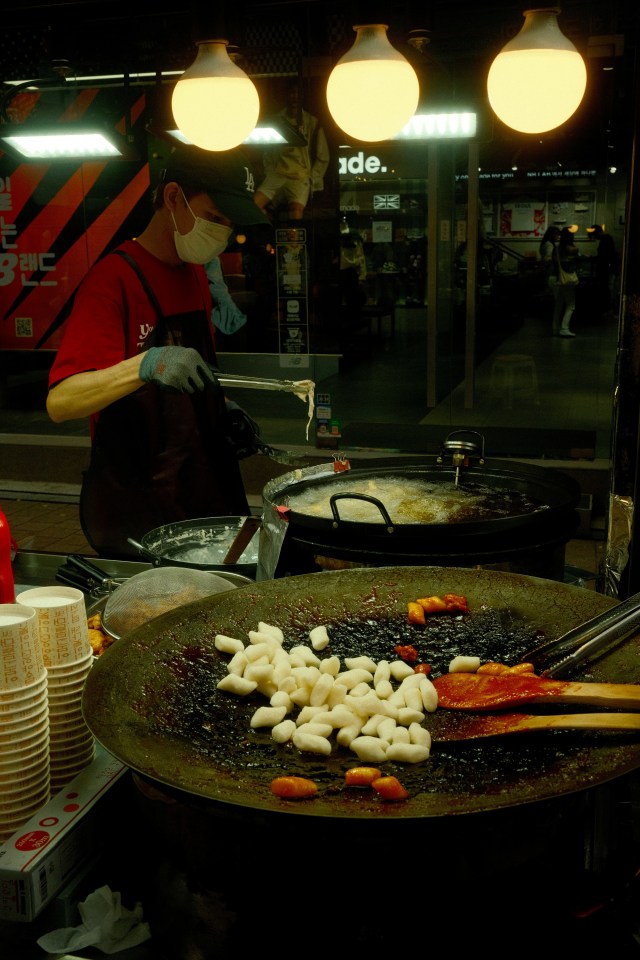
Tteokbokki, at its core, is built from a small number of components, each doing specific work in the final flavor.
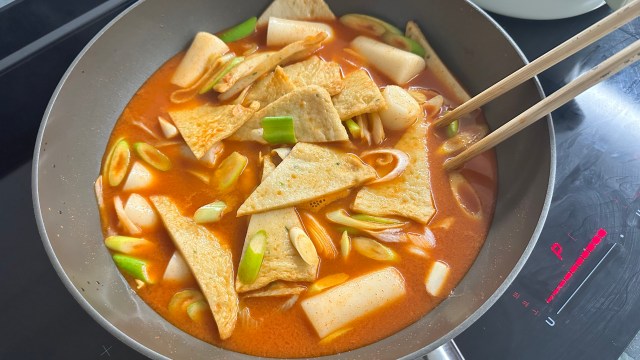
The tteok itself — specifically garaetteok cut into short cylinders, sometimes called tteokbokki-tteok — provides the chewy, slightly bouncy texture that makes the dish so satisfying to eat. The sauce is anchored by gochujang, whose months-long fermentation process gives it a complexity that no quick hot sauce can replicate: sweetness, umami, and heat layered together rather than simply stacked. Gochugaru, Korean chili flakes, often joins the gochujang to sharpen the color and add a cleaner edge of spice. An anchovy-and-kelp broth typically forms the savory base, while sugar or rice syrup balances the heat and gives the sauce its characteristic glossy sheen.
Eomuk — pressed fish cake, usually cut into triangles or strips — appears in nearly every version, soaking up the sauce and adding a faintly briny contrast. Boiled eggs and sliced scallions round out the classic preparation. From there, the dish becomes a canvas: ramyeon noodles thrown into the pot, dumplings added at the table, cheese melted across the top, or — in one of its most globally beloved modern forms — a cream sauce stirred in until the entire thing turns a soft, blushing pink known as rose tteokbokki.
From Sindang-dong to the World
What happened to tteokbokki after Ma Bok-rim’s accidental discovery is a story of slow, then sudden, expansion. Through the 1970s and 1980s, it became a fixture of bunsikjip — casual snack shops — and pojangmacha, the orange-tarped street stalls that line Korean sidewalks after dark. High school students gathered around it after school. Office workers grabbed it as a late-night bite after drinks. It became, in the truest sense, comfort food: cheap, reliably good, and always nearby.
The dish’s profile internationally shifted dramatically in the 2010s, helped along by the broader global wave of interest in Korean food and culture. Cheese tteokbokki, topped with a thick layer of melted mozzarella, became a sensation in part because it photographed beautifully — the cheese pull alone made it irresistible on social media. Rose tteokbokki, blending the traditional gochujang base with cream and tomato, offered an entry point for people intimidated by straightforward heat. Ready-to-cook tteokbokki kits from Korean food brands began appearing on supermarket shelves across North America, Europe, and Southeast Asia, meaning a dish born from a single street stall accident was suddenly something people were making in kitchens thousands of miles from Sindang-dong.
In a particularly striking marker of how far the dish has traveled, the Oxford English Dictionary added tteokbokki as an official entry — defined simply as a Korean dish of cylindrical rice cakes in a spicy gochujang sauce, typically served as street food. Few dishes anywhere can trace their entire documented history back to one woman, one accident, and one alley, and fewer still go on to receive that kind of formal linguistic recognition.
Why It Endures
Part of what makes tteokbokki so enduring is its flexibility. It exists comfortably as a quick snack eaten standing at a street cart and as a full sit-down meal at a jeukseok-tteokbokki restaurant, where the dish is cooked tableside in a simmering pot loaded with vegetables, dumplings, and noodles, and often finished with fried rice once the broth has reduced. It works for a teenager with a few thousand won and it works for a chef reinterpreting Korean cuisine for a tasting menu abroad.
There is also something to be said for the fact that the dish never lost its essential character even as it multiplied into dozens of variations. Whether it is the original red gochujang version, the oil-fried gireum-tteokbokki found at Seoul’s Tongin Market, or the cream-based rose version that took over food media a few years ago, the chewy rice cake at the center remains the same. The dish has expanded without forgetting what made it good in the first place.
That, in the end, might be the real story of tteokbokki: an accident that turned out to be worth repeating, again and again, for more than seventy years.

